
 Pests and weeds Growing and care
How to get rid of slugs
The RHS says slugs and snails cannot and should not be wiped out. Only a few species eat garden plants, so protect the plants they target.
In short
Pick slugs off by torchlight on mild, damp evenings, set beer traps near vulnerable plants and empty them every morning. Water in the morning, plant out sturdy young plants rather than seedlings, and encourage predators. In an RHS trial, eggshell, grit, copper, bark and wool barriers did not reduce damage.
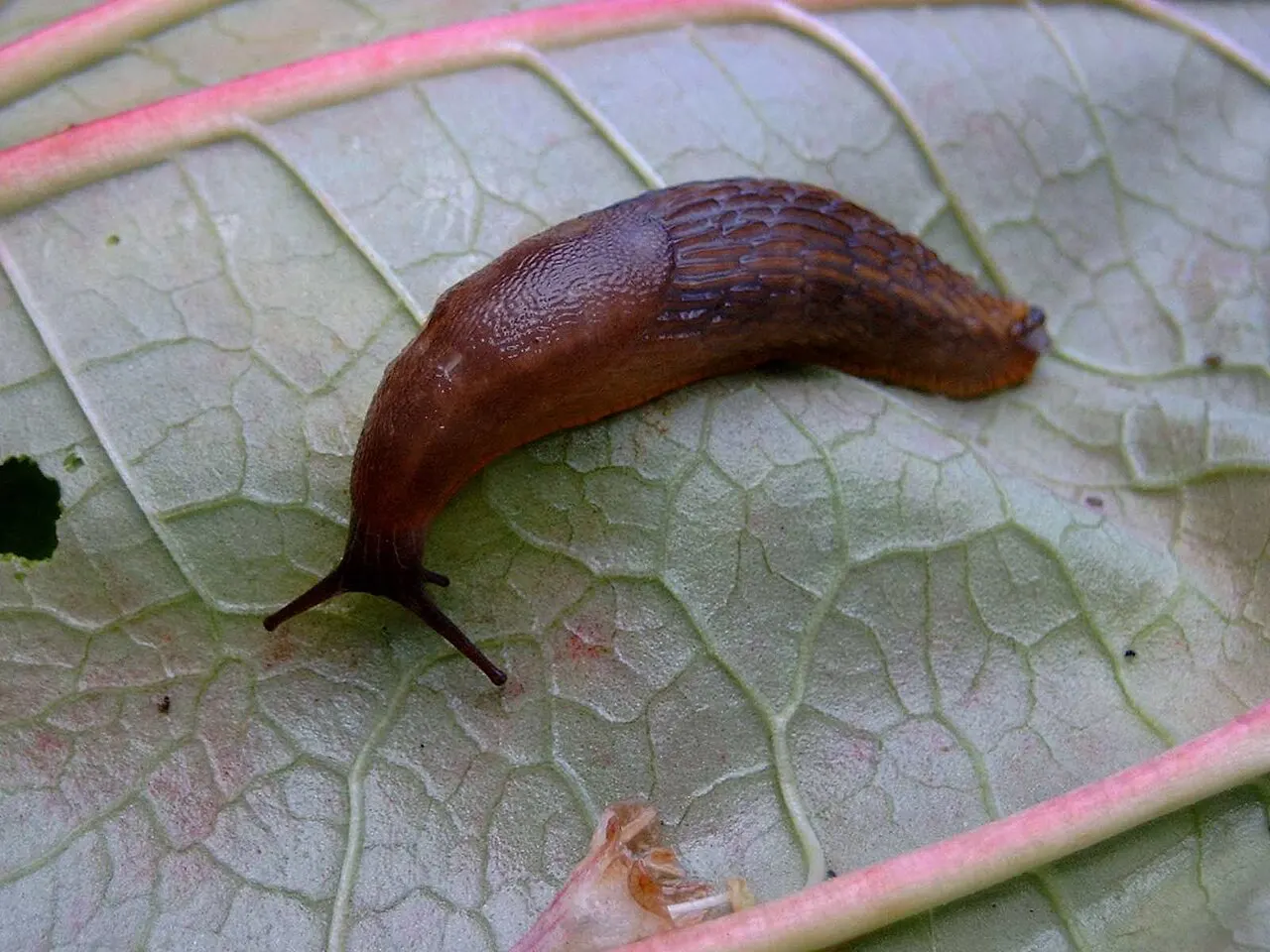

Slugs, snails and which ones do harm
The sources give different counts of UK species. The RHS advice page says the UK has over 44 slug species and 90 snail species. A 2017 RHS article in The Garden gives more than 40 slugs and 100 or more snails, with nine slugs confirmed as pests. The Wildlife Trusts say around 150 species of slugs and snails.
All of them agree on one point: only a few species eat live garden plants. The RHS names the netted field slug, the brown soil slug and the common garden snail as the ones most likely to feed on your plants. Keeled slugs live mostly underground and can tunnel into potatoes and other tubers.
Most slugs and snails help the garden. They recycle dead leaves, dung and dead animals and are part of the composting process, the RHS says. The Wildlife Trusts call them nature's clean-up crew. They also feed birds, frogs, toads, hedgehogs, slow-worms and ground beetles.
Some are allies. The leopard slug does not threaten plants. The RHS calls it the "guard slug", because it is highly territorial and scares off other slugs.
How to recognise the pest species
Garden Organic describes the main culprits:
| Species | What it looks like | What it eats |
|---|---|---|
| Netted or grey field slug | 3–5 cm, light brown with darker veins and blotches | Feeds nearly all year, mostly seeds and plants above ground |
| Common garden slug | About 3 cm, brown, striped lengthwise, orange or yellow underside | A major potato pest |
| Common keeled slug | Up to 6 cm, black or grey with a yellow-orange ridge | Lives underground, eats newly sown seeds and potatoes |
| Large red and black slug | Up to 12 cm, orange-red or black with an orange fringe | Less damaging than the others |
| Garden snail | Shell dark or golden brown, or chestnut with yellow stripes | Garden plants |
The RHS warns that slugs are hard to identify without a close look from every angle and a good guide. Some species can only be told apart by dissection.
Damage, timing and breeding
Slugs and snails make ragged holes in soft leaves and seedlings with their rasping mouthparts, the RHS says. They feed at night, so holes and slime trails are often the only clue. Seedlings, soft young shoots and hostas suffer most.
When. The 2017 RHS article says damage usually peaks in spring and autumn. Snails are dormant in winter, while slugs stay active all year, though less so in winter. Snails need calcium, so they are worst on limestone and chalky soils.
Weather. Slugs need constant moisture and like cool weather, rain and fog, Garden Organic says. In long dry spells they can seal themselves in a papery cocoon on a wall or tree.
Eggs. Garden Organic says a snail lays batches of about 80 pearly-white eggs in crevices in the topsoil or under stones, about six batches a year. That could mean nearly 500 young. The RHS article adds that some slug species lay hundreds of eggs at once and breed several times a year.
Hand-picking and traps
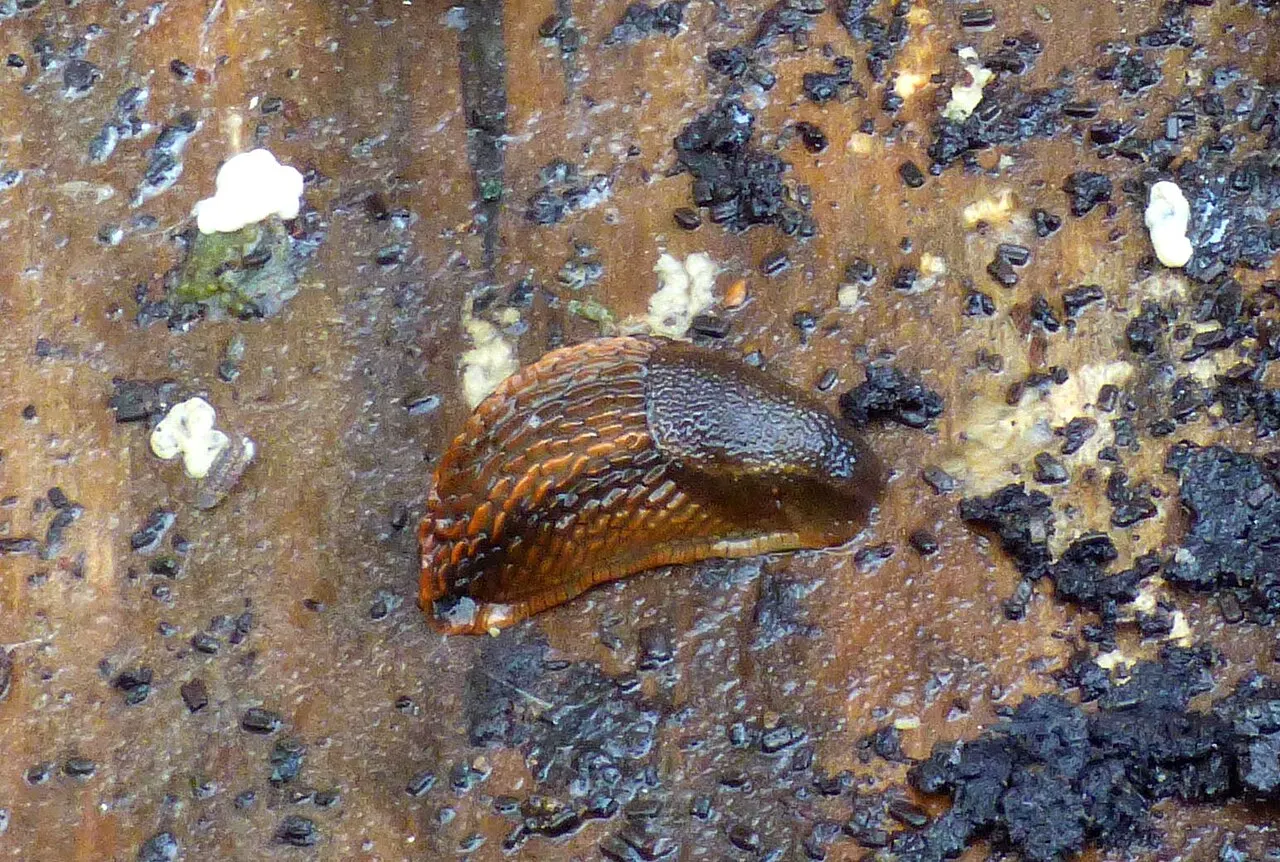

Torchlight searches. The RHS goes out on mild, damp evenings and collects slugs and snails into a container. Its 2017 article calls this a reliable way to catch high numbers.
What to do with them. The RHS suggests moving them to the compost heap or to an area with less vulnerable plants, or leaving them for predators. Some have a homing instinct and may come back. Garden Organic moves them to a natural habitat away from cultivated land.
Beer traps. Sink jars part-filled with beer into the soil near vulnerable plants, the RHS says. Its 2017 article adds: do not sink them fully, so ground beetles do not fall in.
Shelter traps. The RHS lays scooped-out half oranges, grapefruit or melon skins cut side down. Garden Organic puts a flat slate on the soil near plants and checks under it every day. Empty all traps regularly, preferably every morning.
Barriers: what the RHS trial found
RHS entomologist Hayley Jones grew 108 lettuces in nine patio pots and nine raised beds for six weeks. Each lettuce had a complete ring of crushed eggshells, pine bark mulch, copper tape, sharp horticultural grit or wool pellets around it, or no barrier at all. A leaf area meter measured the damage.
The result: protected and unprotected lettuces were damaged the same. The RHS concluded these barriers can be unreliable and ineffective. It has not ruled barriers out entirely, because lab studies show some work and other experiments hinted copper tape could help.
Here the sources disagree. Garden Organic still lists slug collars, grit, wool pellets and copper tape around pots and greenhouse staging, though it says no barrier is failsafe and they should be combined and checked daily. The Wildlife Trusts also suggest copper tape and wool pellets.
Garden Organic suggests two more ideas. Push a bottle cloche, a clear plastic bottle with the bottom cut off, into the soil around a seedling. Or spread a thick layer of bran, oats or coffee grounds, which it says slugs eat, swell up on and become easy prey for birds. Renew it daily in damp weather.
In a separate RHS trial reported in 2017, a straw mulch did not perform well against slugs.
Nematodes
Nematodes are microscopic worms, *Phasmarhabditis hermaphrodita*, that you water into the soil. They infect slugs with bacteria that cause a fatal disease, the RHS explains. Garden Organic says they are native to the UK and work best on small, soil-dwelling slugs. Both say they are unlikely to affect snails.
When to use them. The RHS applies them when the soil is moist and between 5 and 20 °C, from spring to early autumn, preferably in the evening. Garden Organic says the soil must be above 5 °C, which in the south is roughly March to October, with a shorter window further north. In a greenhouse, use them whenever slugs are active.
Aftercare. Garden Organic keeps the soil moist for two to three weeks after applying. Control lasts up to six weeks, then you often need to reapply. The RHS says results may be poorer in heavy clay.
Use them in a targeted way. The RHS points out that nematodes affect all slug species, including the beneficial ones.
Slug pellets and the law
Metaldehyde is banned. Garden Organic reports that sales of metaldehyde pellets were banned from the end of March 2021 and their use from March 2022. The reasons it gives: an unacceptable risk to birds and mammals, toxins reaching rivers, and dogs falling ill or dying after eating pellets. Garden Organic also says never to use pellets containing methiocarb.
Ferric phosphate pellets are sold as "organic". Garden Organic advises avoiding them too. It says they stop slugs feeding and kill them within three to six days, but the chelators in them can harm earthworms and, eaten in large amounts, pets.
The RHS does not recommend any slug pellets, even organic ones, because of their effect on garden wildlife. In an earlier RHS trial reported in 2017, pellets did perform most consistently, and ferric phosphate did almost as well as metaldehyde. The RHS's current advice is still to rely on predators, cultural methods and nematodes.
Grow plants slugs leave alone
Tougher plants. The RHS says woody plants, plants with thick or waxy leaves and many herbaceous plants are less palatable. Its examples include *Alchemilla mollis*, bergenia, foxglove, hardy geraniums, pelargonium and verbascum. Garden Organic adds achillea, hemerocallis, nepeta, phlox and sedum, and notes that hostas and delphiniums are slug favourites. The Wildlife Trusts suggest lavender, rosemary, astrantia, hellebores and hydrangeas, plus onions and hardy herbs.
Potatoes. Early potatoes are usually unaffected, the RHS says. Lift maincrops once the tubers have matured. The RHS lists 'Romano', 'Pentland Dell', 'Wilja', 'Charlotte', 'Kestrel', 'Estima' and 'Sante' among less susceptible varieties. Garden Organic names 'Ambo', 'Cara', 'Desiree', 'Romano', 'Sante' and 'Valor'. More on the crop on our page about growing potatoes.
Young plants. Wait to plant out until seedlings are sturdy, Garden Organic says. The RHS transplants potted plantlets rather than small seedlings and covers them with cloches.
Watering. The RHS waters in the early morning, not in the evening, when damp ground helps slugs move around at night.
Let predators do the work
Birds, frogs, toads, hedgehogs, slow-worms and ground beetles all eat slugs, the RHS says. The Wildlife Trusts add song thrushes and newts.
The Wildlife Trusts suggest log piles, long grass and wildlife-friendly ponds to bring these predators in, and advise against pesticides, which harm other creatures. Garden Organic also recommends avoiding harmful sprays and putting up nest boxes. It moves stone piles, flower pots and plant debris away from cultivated areas, so slugs have fewer places to hide near your crops.
The RHS notes a trade-off. Raking the soil and clearing fallen leaves in winter exposes slug eggs to birds, but it also makes the garden less welcoming for predators.
What works against slugs: what UK sources say
| Method | Verdict |
|---|---|
| Hand-picking by torchlight | Works |
| Beer traps | Catches slugs |
| Grapefruit or melon skins, slates | Catches slugs |
| Nematodes | Works on slugs |
| Eggshells, grit, bark, wool pellets, copper tape | Sources disagree |
| Metaldehyde pellets | Banned |
| Ferric phosphate pellets | Not recommended |
How to do it
- Go out with a torch on mild, damp evenings and collect slugs and snails into a container.
- Sink jars part-filled with beer near vulnerable plants. Leave the rim a little above the soil so beetles do not fall in. Empty the traps every morning.
- Water in the early morning, not in the evening.
- Plant out sturdy young plants in pots rather than tiny seedlings. Cover new transplants with cloches.
- Grow plants slugs dislike, and lift maincrop potatoes once the tubers have matured.
- Move stone piles, flower pots and plant debris away from your crops.
- Make room for frogs, toads, hedgehogs, birds and ground beetles. They all eat slugs.
Common questions
How do I get rid of slugs naturally?
Pick them off by torchlight on mild, damp evenings, use beer traps and shelter traps, water in the morning and encourage predators such as frogs, toads, hedgehogs and birds. The RHS says slugs cannot and should not be eradicated, so target the plants they damage.
Do eggshells, grit or copper tape stop slugs?
In an RHS trial with 108 lettuces, rings of eggshells, pine bark, copper tape, grit and wool pellets made no difference to damage. Garden Organic and The Wildlife Trusts still suggest copper and wool pellets, so the sources disagree.
Do beer traps work?
The RHS recommends them: sink jars part-filled with beer near vulnerable plants and empty them every morning. Leave the rim a little above the soil so ground beetles do not fall in.
Are slug pellets banned in the UK?
Metaldehyde pellets are. Garden Organic reports that sales were banned from the end of March 2021 and use from March 2022. Ferric phosphate pellets are still sold, but neither the RHS nor Garden Organic recommends them because of harm to wildlife.
When should I use nematodes for slugs?
When the soil is moist and above 5 °C. The RHS gives 5–20 °C, from spring to early autumn. Garden Organic says that is roughly March to October in the south and shorter further north. Keep the soil moist for two to three weeks afterwards.
When are slugs most active?
At night, and in mild, damp weather. The RHS says damage usually peaks in spring and autumn. Slugs stay active all year, less so in winter, while snails are dormant in winter.
Are all slugs pests?
No. The RHS says only very few species feed on live plants. Most recycle dead plant material, and the leopard slug even scares other slugs away.
Sources
We wrote this page using the sources below.
- Slugs and snails, Royal Horticultural Society (RHS)
- How to stop slugs and snails: what works?, Royal Horticultural Society (RHS)
- Garden solutions: slugs and snails (Hayley Jones, The Garden), Royal Horticultural Society (RHS), 2017
- Who's who in slugs, Royal Horticultural Society (RHS), 2024
- Slugs and snails, Garden Organic
- Ban on metaldehyde slug pellets finally comes into force, Garden Organic
- The Wildlife Trusts and RHS ask gardeners to make friends with molluscs, The Wildlife Trusts, 2024