
 Pests and weeds Growing and care
How to get rid of moles in the garden
Molehills are annoying, but the mole itself does not eat your plants. It hunts earthworms and grubs, and its tunnels help drain your soil.
In short
The RHS advises treating moles as part of your garden's wildlife where you can. Rake molehills away before mowing, fill collapsed tunnels to keep the lawn level and lay mole netting before new turf. Buzzing devices may only move the mole to another part of the garden.

Why molehills appear
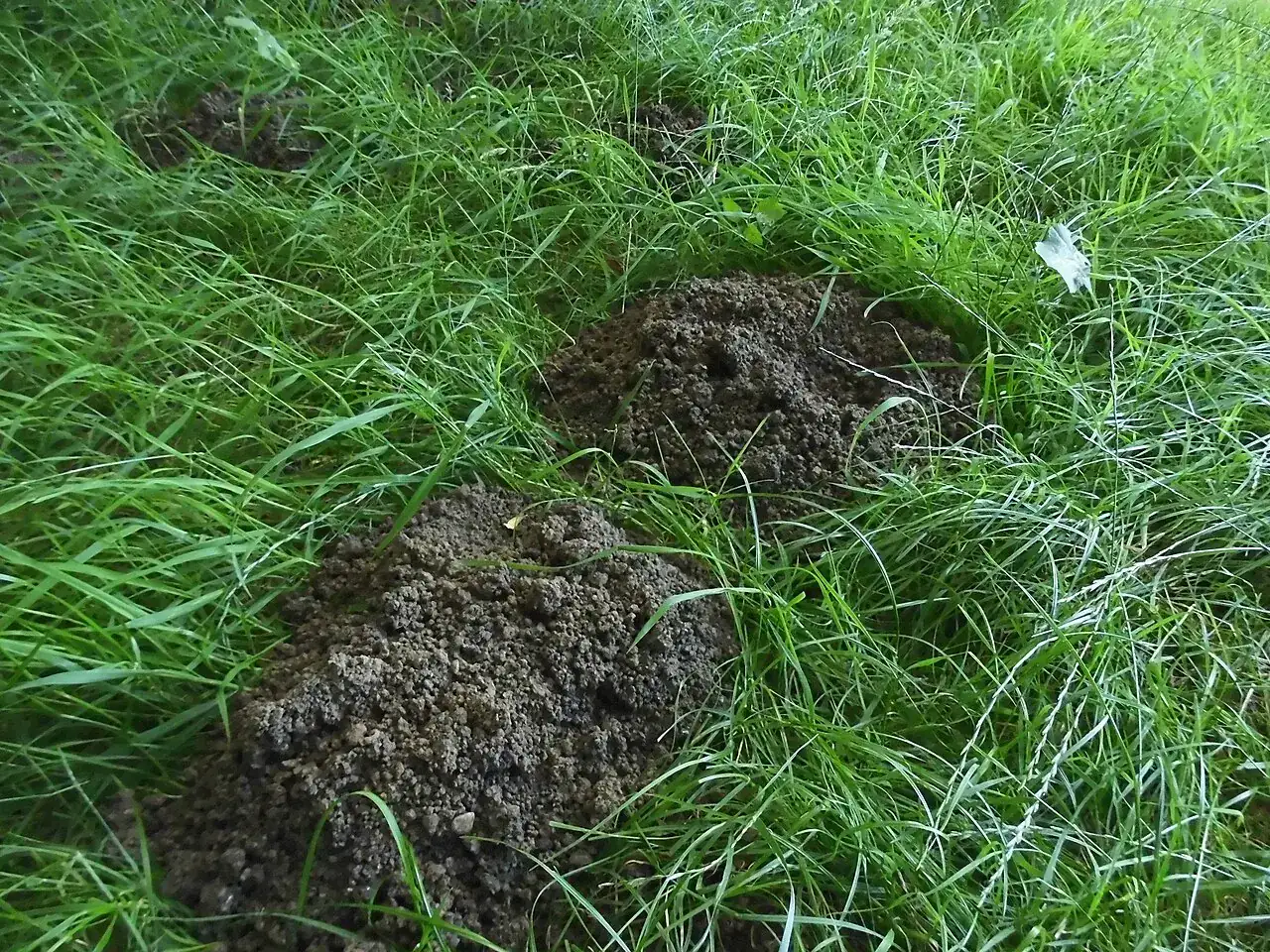
Molehills are the loose soil a mole pushes up to the surface as it digs its tunnels, The Wildlife Trusts explain. The RHS says they are usually the first sign that a mole has moved in. You will rarely see the animal itself, because moles spend most of their lives underground.
Outside the breeding season, moles live largely alone and are very territorial, the RHS says. So the molehills in a small garden probably come from one mole.
Moles are active all year. The RHS says activity is greatest in late winter and early spring, and the main breeding season runs from February to June. Worcestershire Wildlife Trust adds that in wet weather you may see long ridges of earth, as moles travel through the drier soil near the surface.
A mole only stays where there is plenty to eat. Worcestershire Wildlife Trust points out that lots of worms is a sign of healthy soil.
Do moles damage plants?
Not directly. The RHS says moles are carnivores. They eat invertebrates, especially earthworms, that fall into their tunnels, and they do not eat plant roots. The Wildlife Trusts add that moles also eat underground grubs that would otherwise feed on crops.
The damage is a side effect. Tunnelling can disturb the roots of seedlings and other small plants in beds and vegetable plots, the RHS says, and molehills spoil the lawn.
Moles do the soil good too. The Wildlife Trusts say their digging aerates the soil, which supports more kinds of plants and so more insects. The tunnels also improve drainage and reduce puddles and flooding.
Looking after the lawn
Clear molehills before mowing. The RHS removes them from lawns before cutting the grass.
Use the soil. Worcestershire Wildlife Trust suggests digging the molehill up with a trowel or shovel and spreading it on your flower beds, because the soil is rich in nutrients.
Level the surface. The RHS fills collapsed surface tunnels so the lawn stays level.
Netting under new turf. Mole netting can stop moles reaching the surface, the RHS says, but it has to be laid before the turf goes down. It is usually plastic, so it adds to plastic pollution.
Relax a little. Worcestershire Wildlife Trust suggests loosening the idea of a perfectly tidy lawn to make room for nature, while admitting molehills can be a nuisance for the mower.
Repellents: what the RHS says
Buzzing devices. Some garden centres and mail-order firms sell devices that give off a buzzing noise. The RHS says this is "said to drive moles away", but the mole may just move to another part of the garden.
Caper spurge. Some gardeners believe the roots of caper spurge, *Euphorbia lathyris*, give off substances that repel moles. The RHS says it is worth trying, but remove most of the flower heads before they set seed, as the plant can become invasive.
Allium moly. It is sold as a mole deterrent, but the RHS considers its value doubtful.
The RHS's overall advice is to treat moles as part of your garden's biodiversity wherever possible. It notes that a diverse garden supports wildlife, improves soil health and may reduce pest and disease problems.
Mole facts
The sources give slightly different figures:
| RHS | The Wildlife Trusts | Worcestershire Wildlife Trust | |
|---|---|---|---|
| Length | About 15 cm | 15 cm plus a 4 cm tail | 10–15 cm |
| Weight | Not given | 70–130 g | 80–120 g |
| Young | 3 or 4, in an underground nest | Not given | Not given |
| Lifespan | Not given | 3–4 years on average | Not given |
Digging power. The Wildlife Trusts say a mole can dig up to 20 metres of tunnel in a day, using its forepaws to breaststroke through the soil. Worcestershire Wildlife Trust says one mole can move six kilos of soil in 20 minutes.
Appetite. A mole needs to eat more than half its bodyweight every day, Worcestershire Wildlife Trust says. It often bites the heads off worms and stores them for later. One larder held 470 worms.
Winter shrinking. Worcestershire Wildlife Trust says moles shrink their bones and organs by about 11% in winter. This is called Dehnel's phenomenon, and shrews, stoats and weasels do it too.
The extra thumb. Its spade-like front feet have an enlarged wrist bone that works like an extra thumb, Worcestershire Wildlife Trust explains.
Where moles live in the UK
The Wildlife Trusts say moles are widespread and common in the UK. They live in grassland, farmland, orchards, woodland, towns and gardens. They are absent from the Isles of Scilly, most Scottish islands, the Isle of Man and Northern Ireland.
Hard surfaces push them out. The Wildlife Trusts say tarmac and paved gardens drive moles from their habitat, and a wildlife-friendly garden helps them.
Moles and molehills are rarely recorded, so Worcestershire Wildlife Trust asks people in its area to send in sightings with a photo.
Ways to live with moles: what UK sources say
| Method |
|---|
| Tolerate them |
| Remove molehills |
| Fill collapsed tunnels |
| Mole netting |
| Buzzing devices |
| Caper spurge (Euphorbia lathyris) |
| Allium moly |
How to do it
- First decide whether the mole is really a problem. It eats invertebrates, not plant roots.
- Rake or scoop molehills off the lawn before you mow.
- Use the loose soil on your flower beds.
- Fill collapsed surface tunnels with soil to keep the lawn level.
- If you are laying a new lawn, put mole netting down before the turf. It cannot be added later.
- Give it time. Worcestershire Wildlife Trust says that once a mole has settled, new mounds should stop, apart from the odd bit of renovation.
Common questions
How do I get rid of moles in my garden?
The RHS advises treating moles as part of your garden's biodiversity where possible. Remove molehills before mowing, fill collapsed tunnels and lay mole netting before new turf. Buzzing devices may simply move the mole elsewhere in the garden.
Do moles eat plant roots?
No. The RHS says moles are carnivores that eat invertebrates, especially earthworms. Any damage to seedlings comes from tunnelling, not feeding.
When are moles most active?
All year, the RHS says, but most in late winter and early spring. The main breeding season runs from February to June.
How many moles make the molehills in my garden?
Probably one. The RHS says moles live largely alone outside the breeding season and are very territorial, so the molehills in a small garden likely come from a single animal.
Do plants repel moles?
Some gardeners believe caper spurge does. The RHS says it is worth trying, but remove most flower heads before they seed, as it can become invasive. Allium moly is sold as a deterrent, but the RHS doubts its value.
Are moles good for the garden?
In some ways. The Wildlife Trusts say their digging aerates the soil and improves drainage, and they eat underground grubs that would feed on crops.
Sources
We wrote this page using the sources below.
- Moles, Royal Horticultural Society (RHS)
- Mole, The Wildlife Trusts
- Our velvet-clad friends (Wendy Carter), Worcestershire Wildlife Trust, 2024