
 Flower garden Growing and care
Japanese garden
You do not need a temple or an acre. The RHS says a few well-chosen elements, even on a balcony, can give the feel of a Japanese garden.
In short
Pick a few elements that suit your space and budget: naturalistic rocks, raked gravel, a simple water bowl, moss and a stepping-stone path. Keep the design asymmetric but balanced and the planting restrained. The RHS suggests camellias, magnolias, rhododendrons, Japanese acers, hostas and bamboos.

What makes a garden Japanese

The RHS lists the key elements. You can use all of them or just some: naturalistic rock arrangements, water features, organic shapes and flowing lines, minimalism, paths and bridges, stone lanterns and basins, tea houses, raked gravel and restrained planting.
Traditional Japanese gardens carry religious and philosophical meaning, the RHS explains. Choose the elements that suit the size of your garden and your budget.
Andy Bolton of the Japanese Garden Society told the RHS: "Japanese gardens are a wonderful blend of art and nature, creating tranquil, symbolic spaces."
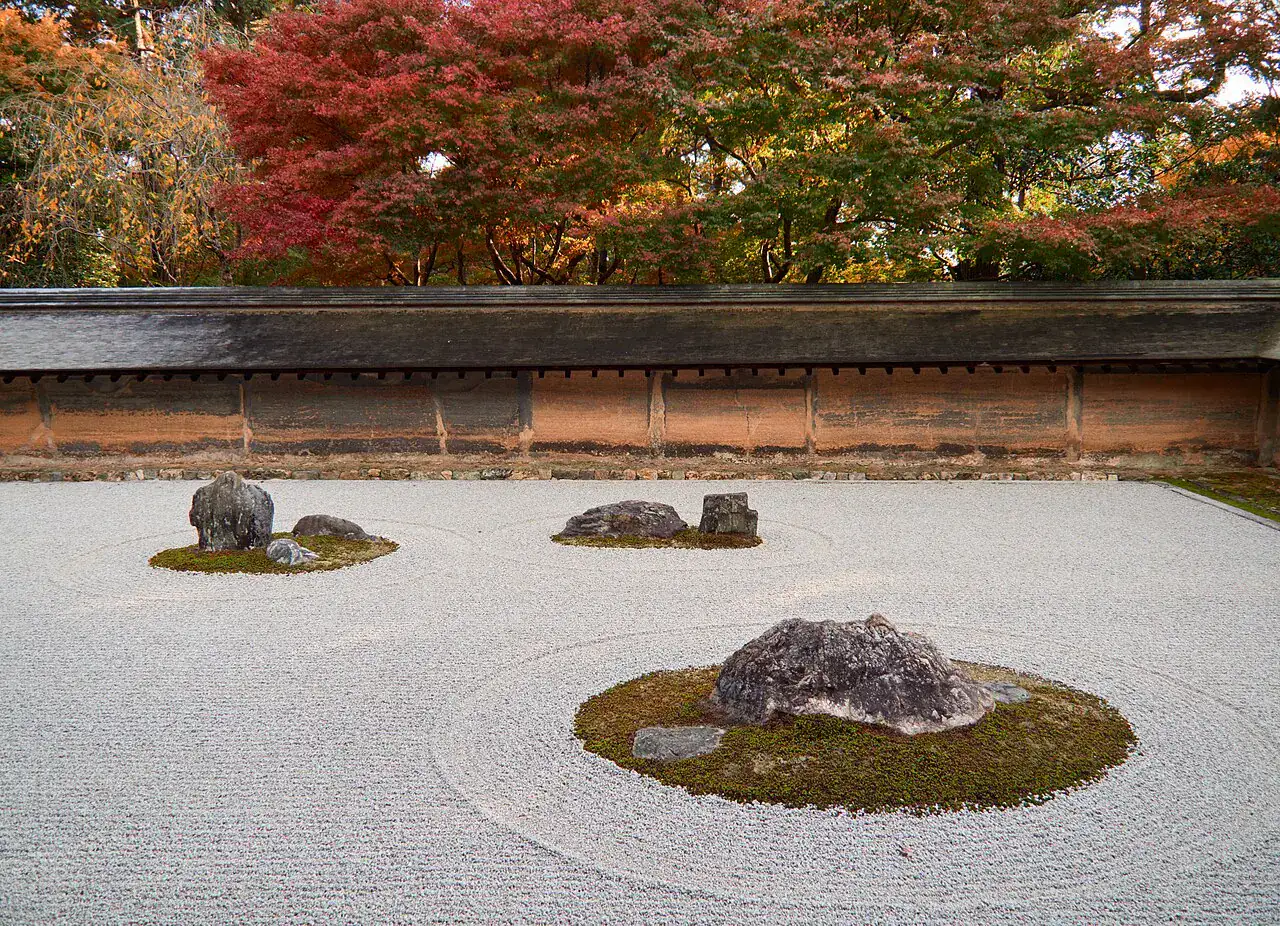
The RHS describes two broad styles. Naturalistic or landscape gardens are miniature, idealised versions of nature. Zen or dry gardens are open spaces with carefully placed rocks, minimal planting and raked gravel.
Rock, water, gravel and moss
Rock. Set interesting rocks into groundcover or gravel to represent mountains, the RHS says. Keep the plants in proportion to the stones. At Attadale Gardens in Scotland, rocks symbolise islands and raked gravel the sea.
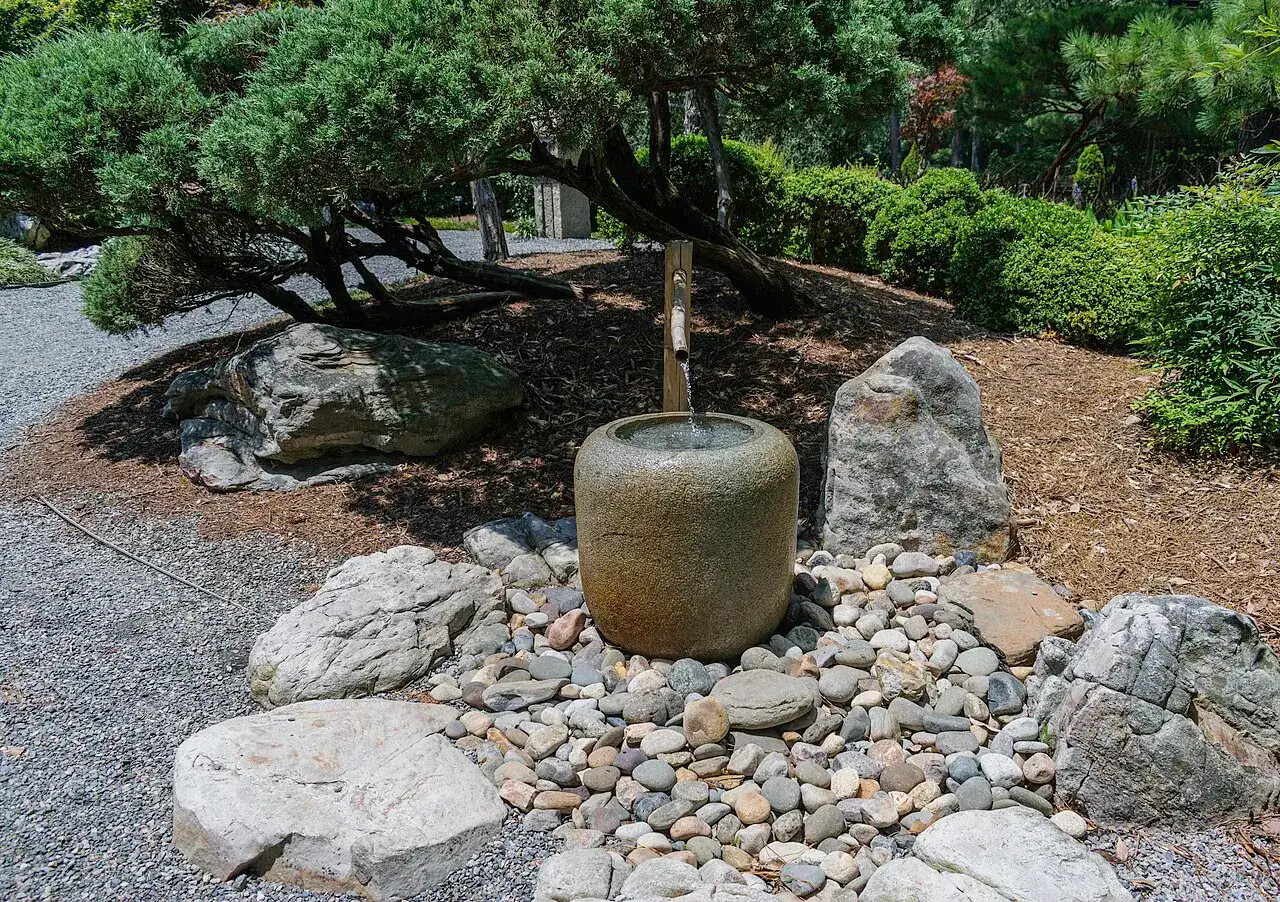
Water. It can be as simple as a water bowl, which also helps wildlife. Waterfalls take time and effort, so the RHS suggests asking a water garden expert. Dry waterfalls and streams can be made from rocks, stones and pebbles.
Gravel. Raked gravel makes a meditative dry garden, with swirls that suggest ripples or waves. The RHS warns it may not suit homes with young children or pets.
Moss and lichen. They make a rock arrangement look ancient and anchor the stones, the RHS says.
Asymmetry. Japanese gardens are asymmetric but balanced. Water edges curve rather than run straight, and rounded boulders are used for steps and edges.
Paths, lanterns and tea houses

Paths. Paths, bridges and stepping stones guide you through the garden and control what you see, the RHS explains. Stepping stones are spaced to slow you down and may lead around water and plants. The Japanese idea of *miegakure* means "hide and reveal".
Stone lanterns. The RHS says stone lanterns, *ishi-dōrō*, came from China and lit paths in Japanese Buddhist temples. Their five sections stand for earth, water, fire, wind and void. In British gardens they are mainly ornamental focal points.
Tea houses. A *chashitsu* was used for the tea ceremony. It is often built from wood and bamboo, with clean lines, muted colours inside and views out to the garden. For a modern garden the RHS suggests simple seating instead.
Minimalism. Use a few key elements. Each plant and structure is chosen for its form, the RHS says, reflecting a perfectionist aesthetic.
Plants that suit UK gardens
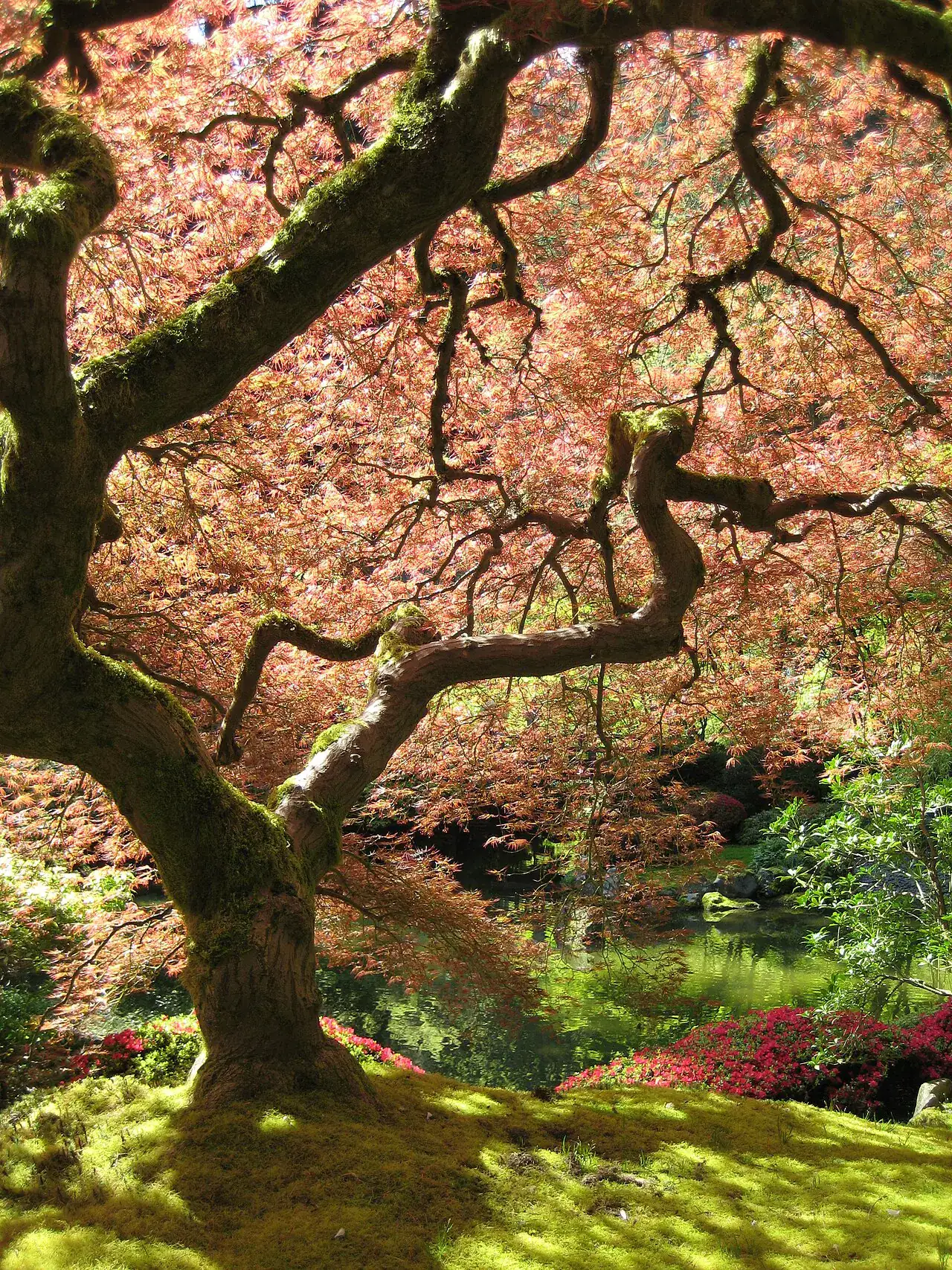
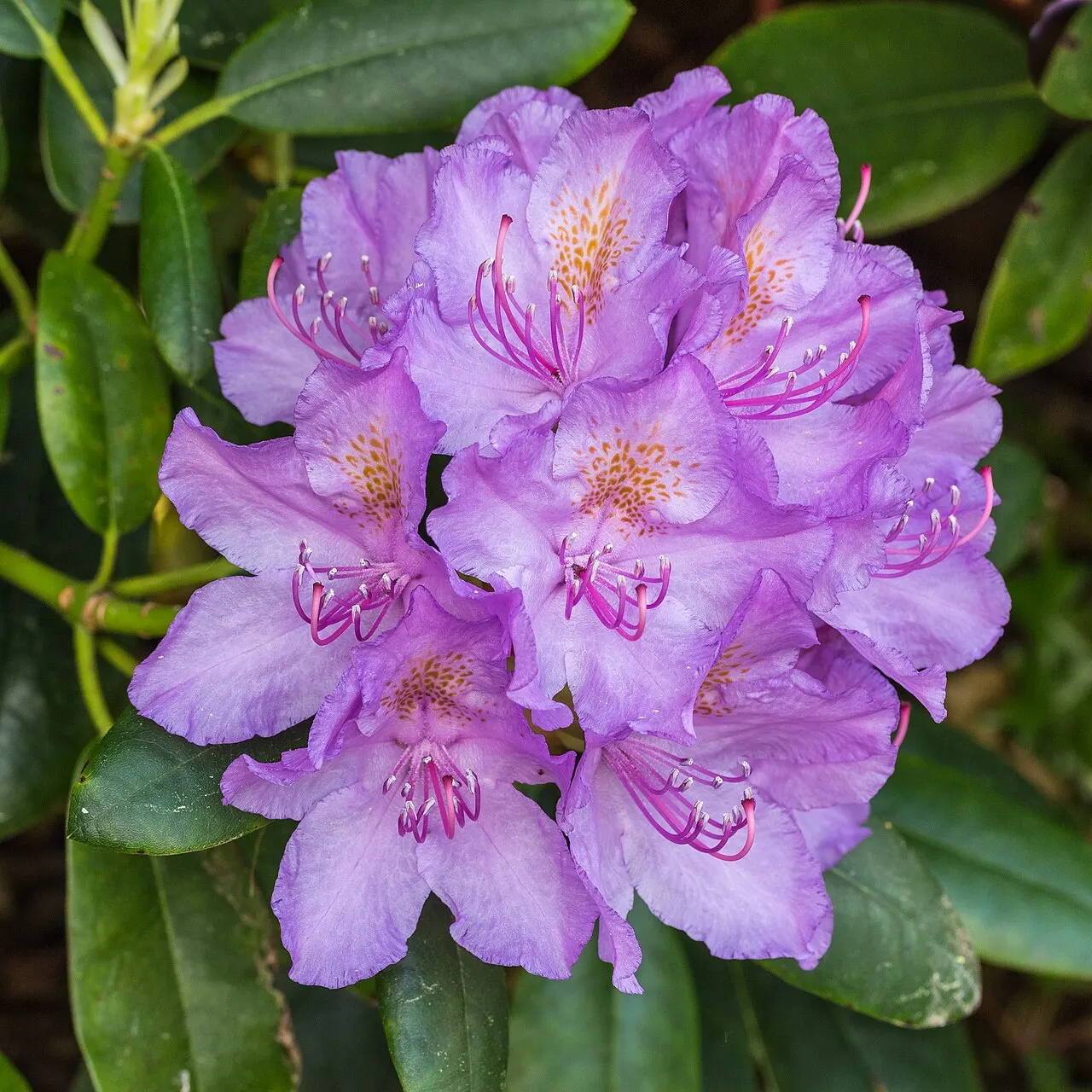
The RHS says many plants from Japan do well in the UK: camellias, magnolias, rhododendrons, Japanese anemones, Japanese acers, hostas and bamboos. The table above lists its suggestions of plants with a Japanese feel.
Many plants that grow in Japan suit the UK climate, the RHS notes, and many of our oldest gardens have large, ancient specimens that have grown well here.
Clip shrubs, especially evergreens, into organic forms. The RHS calls cloud pruning a popular form of topiary for this style.
Japanese maples
Hardiness. The RHS rates *Acer palmatum* H6, hardy in all of the UK and northern Europe, down to about −15 to −20 °C. Trees in the ground are usually fully hardy. Trees in pots need protection: raise the pot on feet or bricks and wrap it in hessian or reused bubble wrap.
Position. Choose a sheltered spot away from strong wind, with partial shade so afternoon sun does not scorch the leaves. Green-leaved forms can take full sun but do best in dappled shade. Red and purple ones need some sun to colour well. The RHS plant page says leaf scorch can come from dry soil or too much exposure.
Soil. The RHS says they prefer slightly acidic, humus-rich, well-drained soil, but grow in most soils. Plant from October to March, with no more than 2.5 cm of soil over the main roots.
Pruning. Prune from July to January, the RHS says. At other times maples bleed sap, which weakens the tree. Keep it light.
Size. Most stay small, rarely more than 1–2 m tall, though a tree can reach 8 m in fifty years.
Cloud pruning
Cloud pruning is a Japanese way of training trees and shrubs into cloud-like shapes. The RHS says the Japanese name *niwaki* means "garden tree". Niwaki grow in the ground, while bonsai grow in containers.
Plants. The RHS names box, yew, pine and Japanese privet, and also *Phillyrea latifolia*, *Luma apiculata*, Japanese holly and *Camellia japonica*. Evergreens give more striking results and interest all year.
When. Prune in early or late summer, once a year with secateurs or shears. Faster growers may need two trims a year. Prune flowering shrubs after they flower.
How. Choose a plant with an interesting branch structure. Decide which branches to keep, because removed branches are slow to regrow. Clear unwanted growth from the centre, shape the side shoots into clouds, then, once the plant reaches the size you want, trim the tips to make the clouds fuller. Use secateurs on large-leaved plants, as shears leave damaged leaves.
The RHS rates it as moderate and says it can take a long time. Buying a larger, pre-shaped plant costs more but saves years.
Where to see Japanese gardens in the UK

The RHS says all five RHS gardens have Japanese-inspired areas, including the Rock Garden at RHS Wisley in Surrey and the Sandstone Rock Garden at RHS Harlow Carr in Harrogate.
Among its partner gardens, the RHS highlights:
- Tatton Park, Cheshire. Inspired by the 1910 Japan-British Exhibition and described as a very good example of a Meiji period tea garden, with mosses, ferns, azaleas, maples and pines. - Durham University Botanic Garden. Its SAKURA Friendship Garden opened in April 1999, with 57 cherry trees and a stone lantern from Kyoto. - Belvoir Castle, Leicestershire. A Japanese Woodland Garden begun in 2004, with over 500 specimen plants. - The Japanese Garden at Cowden, Scotland. First created in 1907 and restored over ten years. It follows *Ma*, the value of negative space, and *Mitate-mono*, the reuse of local materials. - Green Island Gardens, Essex. A small courtyard designed to look good all year from a ground-floor window.
The RHS advises checking each garden's website before you visit.
Japanese gardens in British history
British interest in Japanese gardens began in the late 19th century, the RHS says, as gardeners moved away from highly formal styles. Japan had opened its borders to trade in the 1850s.
The 1910 Japan-British Exhibition in London introduced many visitors to tea houses, stone lanterns and bonsai, the RHS explains. It adds that bonsai originally came from China.
The RHS also mentions designer Ishihara Kazuyuki, whose designs feature water heavily, at RHS Chelsea in 2015, and a minimalist garden by Saori Imoto at RHS Hampton Court in 2016.
Keeping it looking right
Japanese gardens "do need careful upkeep", Andy Bolton of the Japanese Garden Society told the RHS, and neatness is key to their beauty.
Gravel. The RHS calls tending raked gravel calming and meditative.
Clipped shapes. Trim cloud-pruned plants once a year, or twice for fast growers, in early or late summer.
Maples. Water in dry spells in the first year, and about once a week in hot, dry weather. In-ground trees do not need feeding, the RHS says. Mulch with 10 cm of compost or bark, kept away from the trunk. Cover young leaves with fleece when cold nights are forecast.
Plants with a Japanese feel, from the RHS list
| Plant | Type |
|---|---|
| Acer palmatum 'Orange Dream' | Japanese maple |
| Prunus 'Accolade', Prunus serrulata 'Amanogawa' | Flowering cherries |
| Magnolia × loebneri 'Leonard Messel' | Magnolia |
| Camellia japonica 'Snow White' | Evergreen shrub |
| Rhododendron luteum | Yellow azalea |
| Ilex crenata, Pinus mugo | Japanese holly, dwarf mountain pine |
| Phyllostachys nigra | Black bamboo |
| Hosta 'Sum and Substance', Astilbe chinensis 'Pumila' | Shade perennials |
| Asplenium scolopendrium, Cyrtomium falcatum | Hart's tongue fern, Japanese holly fern |
| Anemone × hybrida 'Königin Charlotte', Iris sibirica | Japanese anemone, Siberian flag |
| Hydrangea macrophylla 'Madame Emile Mouillère' | Shrub |
| Pennisetum alopecuroides | Chinese fountain grass |
How to do it
- Choose the elements that suit your garden's size and budget. The RHS says you can adapt the look to a balcony.
- Set interesting rocks into gravel or groundcover to stand for mountains. Keep plants in proportion to the stones.
- Add water, even if it is just a water bowl, or build a dry stream from rocks, stones and pebbles.
- Rake gravel into swirls that suggest ripples or waves.
- Lay a path of stepping stones spaced to slow you down, curving to hide and then reveal views.
- Plant sparingly. Choose each plant for its form and clip evergreens into soft, organic shapes.
- Keep it neat. The Japanese Garden Society says neatness is key to the style.
Common questions
How do I create a Japanese garden?
Choose a few elements that suit your space and budget: naturalistic rocks, raked gravel, water, moss, stepping stones and restrained planting. The RHS says the design should be asymmetric but balanced, and the look can even be adapted to a balcony.
What plants suit a Japanese garden in the UK?
The RHS names camellias, magnolias, rhododendrons, Japanese anemones, Japanese acers, hostas and bamboos as plants from Japan that suit UK gardens. Its list also includes flowering cherries, Japanese holly, dwarf mountain pine and ferns.
Is a Japanese maple hardy in the UK?
Yes. The RHS rates Acer palmatum H6, hardy in all of the UK, to about −15 to −20 °C. Trees in pots need protection in winter, and all need shelter from strong wind.
When should I prune a Japanese maple?
From July to January, the RHS says. Pruning at other times makes maples bleed sap, which weakens the tree. Keep pruning light.
What does the gravel mean in a Japanese garden?
The RHS says raked gravel makes a meditative dry garden, with swirls suggesting ripples or waves. At Attadale Gardens, the rocks stand for islands and the gravel for the sea.
What is cloud pruning?
A Japanese way of shaping trees and shrubs into clouds, called niwaki. The RHS suggests box, yew, pine or Japanese holly, trimmed in early or late summer.
Sources
We wrote this page using the sources below.
- How to create a Japanese-style garden, Royal Horticultural Society (RHS)
- Japanese-inspired RHS Partner Gardens, Royal Horticultural Society (RHS)
- How to grow Japanese maples, Royal Horticultural Society (RHS)
- Acer palmatum, Royal Horticultural Society (RHS)
- Cloud pruning, Royal Horticultural Society (RHS)