
 Chillies and peppers When to sow and plant
When to sow chillies
Chillies need a long, warm season. In a UK summer the head start you give them in late winter decides how many fruits you pick.
In short
Sow chillies indoors in late winter or early spring. With a heated propagator you can start in January, without one from March. Seeds need about 21 °C to germinate. Keep plants indoors until at least late May and put them outside only when nights stay above 12 °C.

Chillies and peppers: what to do and when
Under cover and outdoors, for UK conditions. The weather differs from year to year and from north to south, so check your local conditions too.
Why chillies are sown so early
Chillies need a long growing season. The RHS says that an early start means an earlier and longer harvest, and it recommends sowing indoors from late winter to mid spring.
BBC Gardeners' World gives a simple rule. If you have a heated propagator, sow as early as January. If you do not, sow from March. Without extra heat, seeds sown in January sit in cold compost and germinate slowly, while March brings longer days and warmer windowsills.
Sweet peppers and aubergines are in the same position. A BBC Gardeners' World article from March 2026 groups chillies, aubergines and sweet peppers together as crops that need a long season and benefit from early sowing. Sow them too late, it says, and they may not crop before temperatures begin to fall again in autumn.
Warmth for germination
Chilli seeds need warmth. The RHS gives a germination temperature of around 21 °C and says a heated propagator is best, although a warm windowsill should be fine too. BBC Gardeners' World suggests setting a propagator to around 25 °C for fast germination, if it has a thermostat.
Fill pots with peat-free multi-purpose compost to 1 cm below the rim, firm gently and water with warm water. BBC Gardeners' World then sows four or five seeds per pot on the surface, spaced apart, and covers them with a thin layer of compost or vermiculite. A clear bag or propagator lid keeps the moisture in.
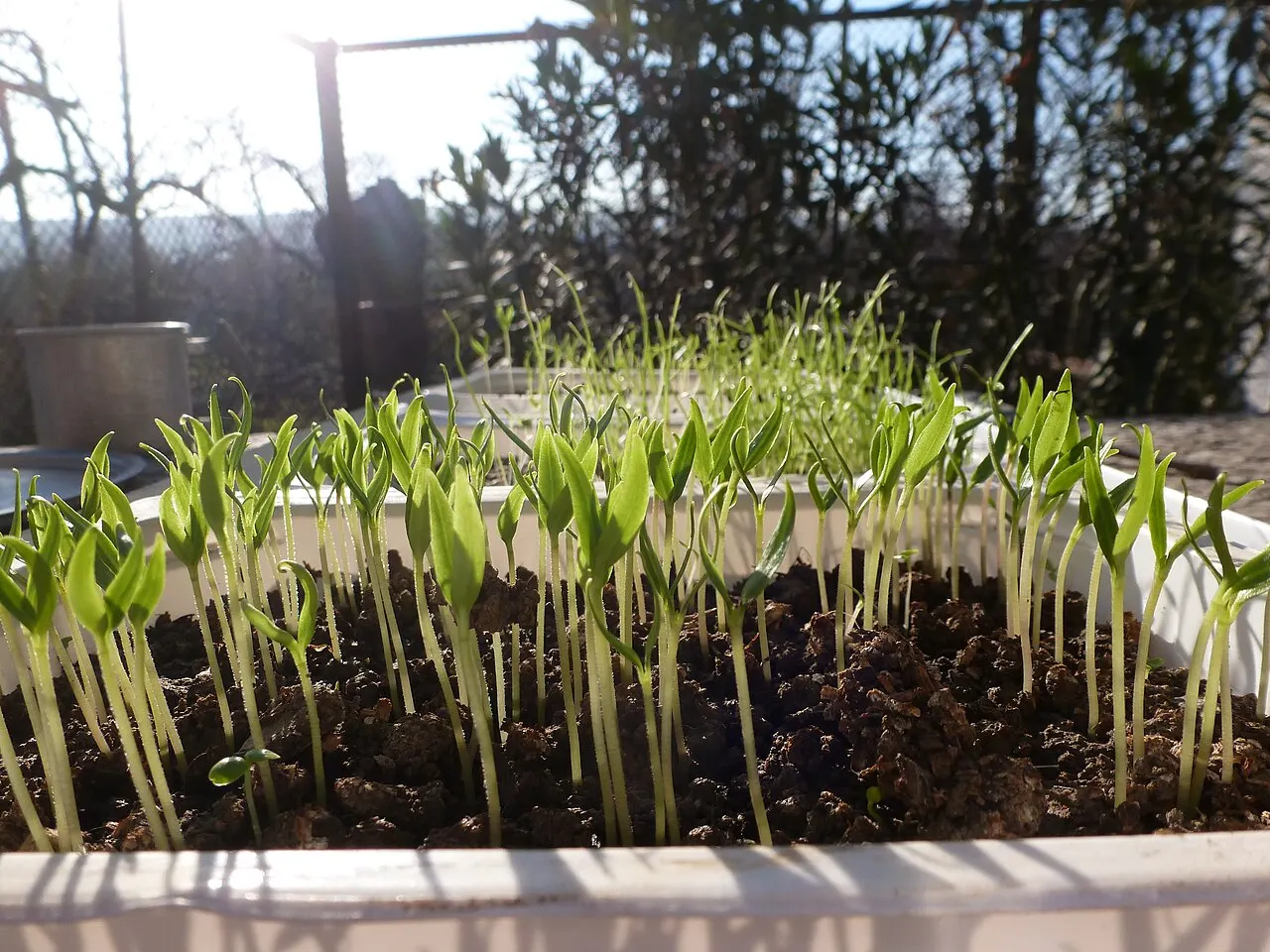
As soon as seedlings appear, the RHS says to take them out of the propagator and keep them at 16–18 °C in bright light, watering so the compost stays evenly moist. BBC Gardeners' World suggests turning them every day to stop them becoming leggy.
Pricking out and potting on
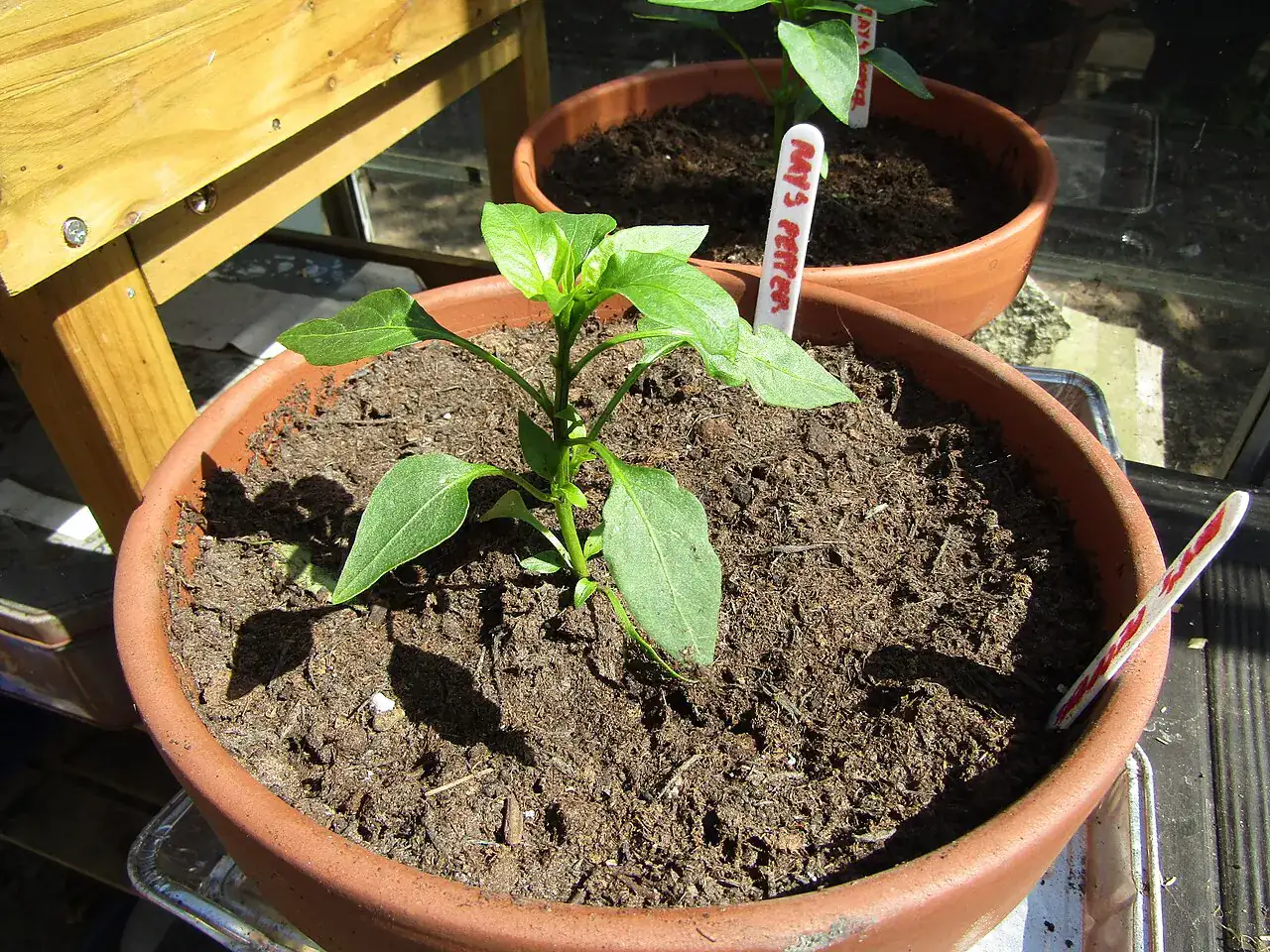

The RHS moves seedlings into their own module or small pot when they are 2–3 cm tall, using peat-free multi-purpose compost. Once roots show through the drainage holes, they go into 13 cm pots.
BBC Gardeners' World transplants seedlings at 5–6 cm tall into 7.5 cm pots, or when the first true leaves appear. Handle them by the leaves, not the stem, and pot on as the roots fill each pot. Its final pot size is 30 cm. The RHS suggests a 22 cm pot for one plant, or three plants in a standard growing bag.
Grafted plants are another option. The RHS says they are more vigorous, suit cool conditions and can be ordered for delivery from mid April.
Greenhouse, windowsill or outdoors?
Chillies crop best under glass. The RHS notes that fruiting outdoors may be reduced, especially in cooler summers. BBC Gardeners' World recommends growing the hottest chillies in a greenhouse.
Greenhouse. BBC Gardeners' World moves plants into an unheated greenhouse or conservatory once night temperatures are above 10 °C. The RHS says plants can usually cope with a minimum night temperature of about 12 °C but grow better above 15 °C. Heat can be a problem too: temperatures over 30 °C can reduce fruiting, so ventilate and shade in hot spells.
Outdoors. The RHS keeps young plants indoors until at least late May. Outside, it grows chillies only in mild locations, once nights are reliably at least 12 °C, usually late May or early June. Harden plants off for two to three weeks first, warm the soil under cloches for a couple of weeks before planting, and keep the cloches on, ideally until the end of June. Space plants 38–45 cm apart, or 30 cm for dwarf varieties.
Frost: the hard limit

BBC Gardeners' World says to wait until all risk of frost has passed before moving chillies to their final spot outside. The Met Office explains that the average last air frost usually comes before the end of April in southern and coastal areas, but often in May in northern areas and on higher ground, and in a few places even in June.
The Met Office also points out that ground frost is more common than air frost in May, and that it can damage tender plants even when the thermometer stays just above freezing. Valleys and rural gardens are more at risk than towns. For chillies the 12 °C night rule from the RHS is stricter than simply waiting for the last frost, and the RHS says chillies crop best in a greenhouse.
Feeding, pinching out and the first fruit
Both sources start feeding when flowers appear. The RHS feeds container plants weekly with an organic, high-potassium liquid fertiliser from the start of flowering. BBC Gardeners' World also feeds weekly with a high-potash feed such as tomato feed. Keep the compost steadily moist: the RHS warns that flower buds may fall off if plants get too dry.
On pinching out, the sources disagree. BBC Gardeners' World pinches out the growing tips when plants are about 20 cm tall to encourage bushy growth. The RHS says pinching out is not usually needed. It can be done at about 30 cm for a bigger crop of smaller fruits, but it can delay fruiting.
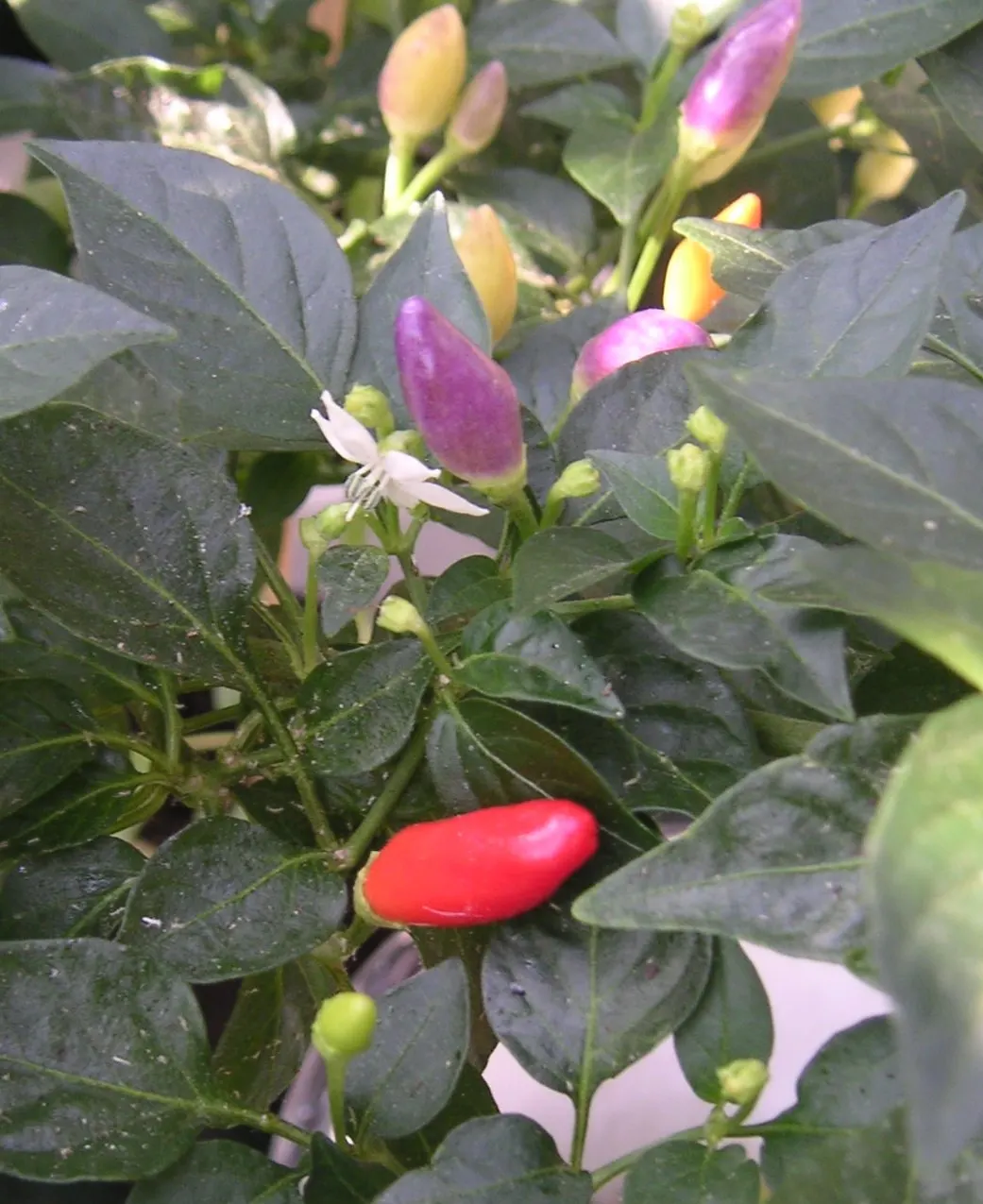
In a greenhouse, the RHS expects fruit from mid summer into autumn, and outdoors fruiting should start by August. BBC Gardeners' World notes that bird's eye chillies can take 120 days or more from planting out to ripen. The RHS picks chillies green to get the biggest crop. Leaving early fruit to ripen on the plant gives a richer, hotter flavour, but it holds back new flowers.
Can you keep a chilli plant over winter?
Here the sources disagree again. BBC Gardeners' World says chillies are tender, do not survive winter and should be sown fresh each year. The RHS says plants can be kept in a heated place over winter instead of starting again, which gives them a head start the next summer. Prune them back to a manageable size, keep them somewhere warm and bright such as a windowsill or conservatory, and water sparingly.
Both agree on one thing: chillies will not survive outdoors in a UK winter. If you want to try overwintering, bring the plants in towards the end of the season, which the RHS says also helps the remaining fruit to develop.
Cheat sheet: sowing chillies
| Job | When or how |
|---|---|
| Sow with a heated propagator | From January |
| Sow without a propagator | From March |
| Germination temperature | Around 21 °C (a propagator set to about 25 °C speeds it up) |
| After germination | 16–18 °C in bright light |
| Pot on | At 2–3 cm tall into modules or small pots, later into 13 cm pots |
| Into an unheated greenhouse | When nights are above 10 °C |
| Outside, mild areas only | Nights reliably at least 12 °C, usually late May or early June, after 2–3 weeks of hardening off |
How to do it
- Fill small pots with peat-free multi-purpose compost to 1 cm below the rim, firm gently and water with warm water.
- Sow four or five seeds on the surface of each pot, spaced apart, and cover them with a thin layer of compost or vermiculite.
- Keep them at around 21 °C in a heated propagator or on a warm windowsill under a clear bag.
- Once the seedlings appear, take them out of the propagator and keep them at 16–18 °C in bright light. Turn them daily.
- When they are a few centimetres tall, move each one into its own small pot, holding it by the leaves.
- Pot on as the roots fill the pot. Keep the plants indoors until at least late May.
Common questions
Is it too late to sow chillies in April?
The RHS sowing window runs to mid spring, so April is still possible, but BBC Gardeners' World warns that late sown chillies may not crop until temperatures start to fall in autumn. Young plants are a quicker option.
How long do chilli seeds take to germinate?
Our sources do not give a number of days. They agree that warmth speeds it up: around 21 °C according to the RHS, and a propagator set to about 25 °C according to BBC Gardeners' World.
When can chillies go outside in the UK?
The RHS keeps them indoors until at least late May and plants them outside only in mild areas, once nights are reliably at least 12 °C, usually late May or early June.
Should I pinch out chilli plants?
BBC Gardeners' World pinches out the tips at about 20 cm for bushier plants. The RHS says it is not usually needed and can delay fruiting.
When should I sow sweet peppers?
BBC Gardeners' World treats sweet peppers like chillies and aubergines: crops that need a long season and an early start, sown in late winter or early spring under cover.
Sources
We wrote this page using the sources below.
- How to grow chilli peppers, Royal Horticultural Society (RHS)
- How to grow chillies, BBC Gardeners' World Magazine, 2021
- Don't miss your last chance to sow chillies, aubergines and sweet peppers, BBC Gardeners' World Magazine, 2026
- Why frost can still occur in late spring, Met Office, 2026