
 Hydrangeas When to sow and plant
When to plant hydrangeas
The date is the easy part. The RHS cares just as much about light shade, shelter from late frost and, for blue or pink cultivars, how acid your soil is.
In short
The RHS says the best time to plant shrubby hydrangeas is spring or autumn, soon after you buy them. Plants in containers can go in all year, as long as the soil is not frozen, too wet or excessively dry in summer. Light shade suits them best.
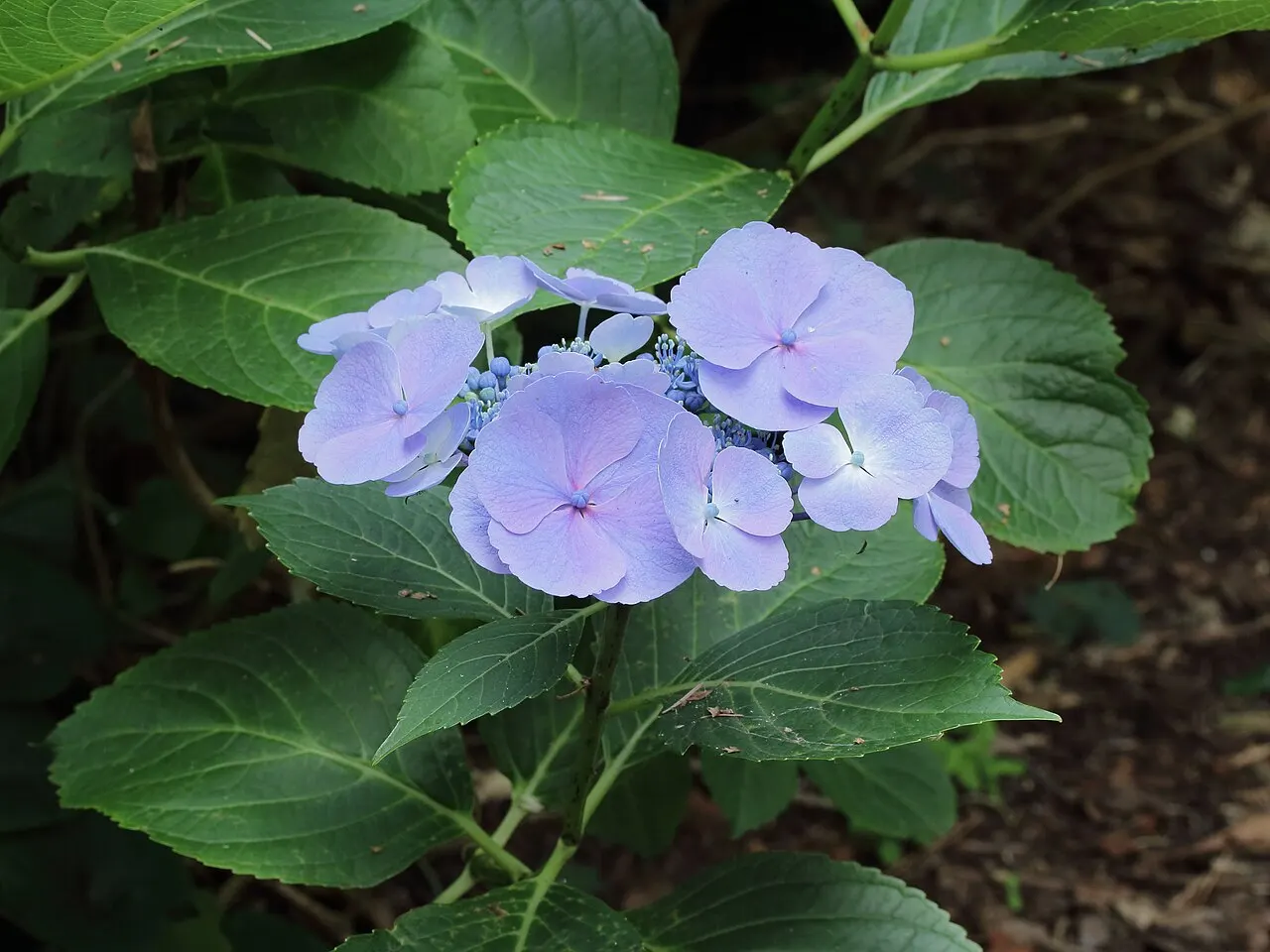

Hydrangeas: what to do and when
Under cover and outdoors, for UK conditions. The weather differs from year to year and from north to south, so check your local conditions too.
Spring or autumn: what the RHS says
The RHS growing guide for shrubby hydrangeas says the best time to plant is in spring or autumn. It does not pick one over the other. It does say to plant soon after you buy the plant.
Plants in containers are more flexible. The RHS says containerised plants can be planted all year round, as long as the soil is not frozen, too wet, or excessively dry in summer.
The RHS does not give months for spring and autumn. That is why the chart above shows them as approximate.
What you are likely to buy
The RHS says garden centres usually sell shrubby hydrangeas in 3 litre pots, at 30 cm or more in height. Mail-order plants may arrive as young cuttings in 9 cm or 1 litre pots.
Check the height on the label. Some grow into sizeable shrubs. The RHS plant guide lists *Hydrangea arborescens* 'Annabelle' at 1.5–2.5 m high and wide, while *H. macrophylla* 'Altona' reaches 0.5–1 m high.
Where to plant: light shade and shelter
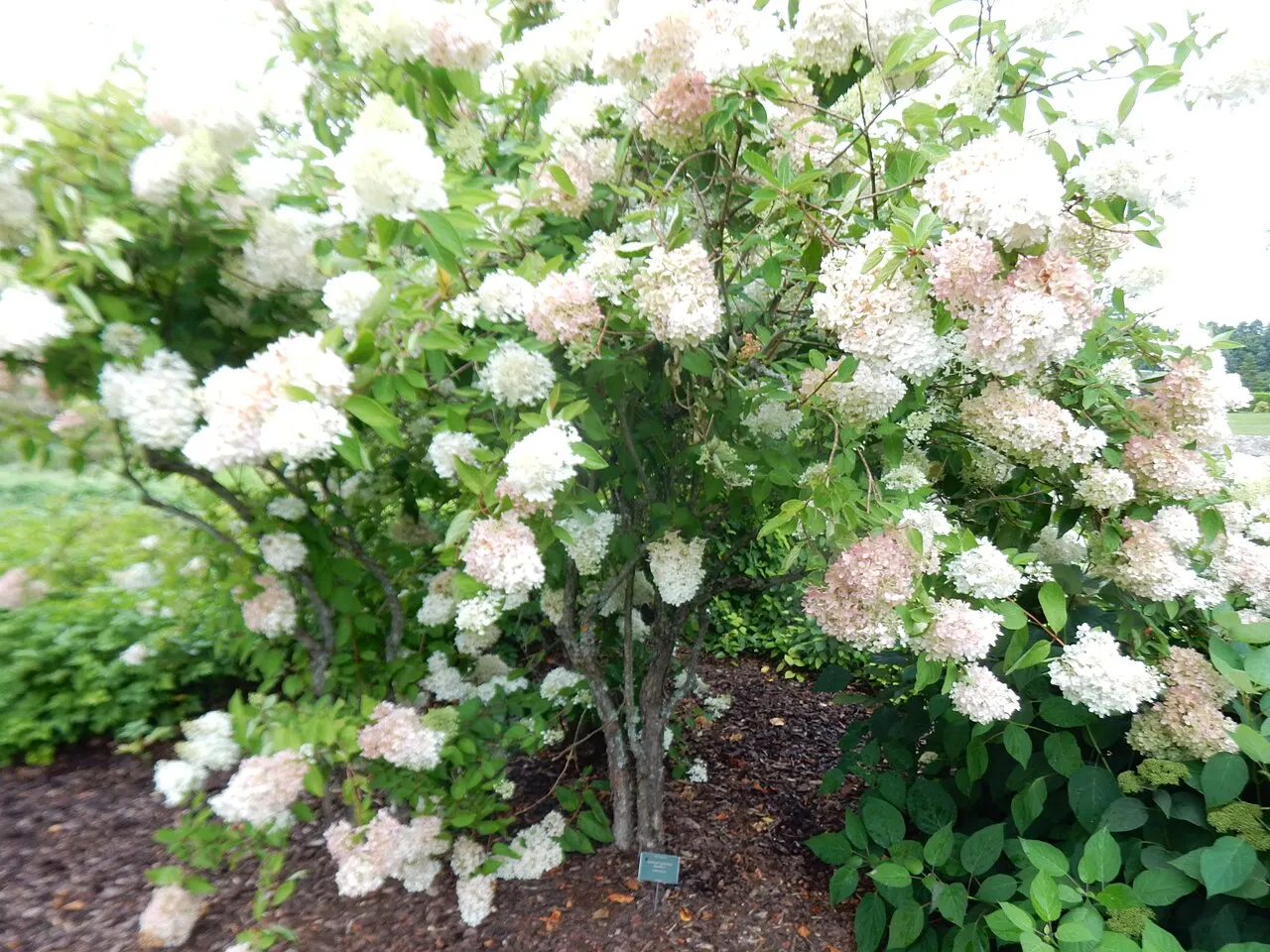

The RHS growing guide says to ideally plant your shrubby hydrangea in light shade. A sunnier spot works too, if the soil is not too dry in summer.
The RHS plant guide puts it as sun or light shade, in a spot sheltered from cold winds. The new spring growth is prone to frost damage, so it says to avoid frost pockets and scorching wind. The growing guide gives the same reason for avoiding frost pockets and exposed spots: to reduce late frost damage to the new spring growth.
Spacing depends on how vigorous the hydrangea is. The RHS gives 90 cm to 2.4 m.
Soil
The RHS plant guide says hydrangeas like moister soils that are not prone to waterlogging. The growing guide calls them well suited to clay soils, and says to plant in moist soil that drains well.
Improving the soil and mulching with organic matter helps keep it moist, the plant guide says. It suggests garden compost or a manure-based soil conditioner.
How to plant a hydrangea
The RHS method is simple. Water the plant well before planting. Dig a hole as deep as the rootball and three times wider. Set the plant so the surface of its compost is level with the surrounding soil. Avoid planting it too deep.
Firm the soil around the rootball by pressing with the heel of your boot or shoe. Water it in and keep the soil damp in the following weeks.
Mulch with a soil improver, and leave a gap of 10–15 cm around the base to reduce the drying out of the soil.
Watering in the first year
Hydrangeas thrive in evenly moist soil, the RHS says. In their first growing season, from spring to summer, water newly planted hydrangeas when there has been no significant rain for 7–10 days.
Even mature plants benefit from watering in hot, dry spells, and regular mulching reduces moisture stress.
Soil acidity and flower colour
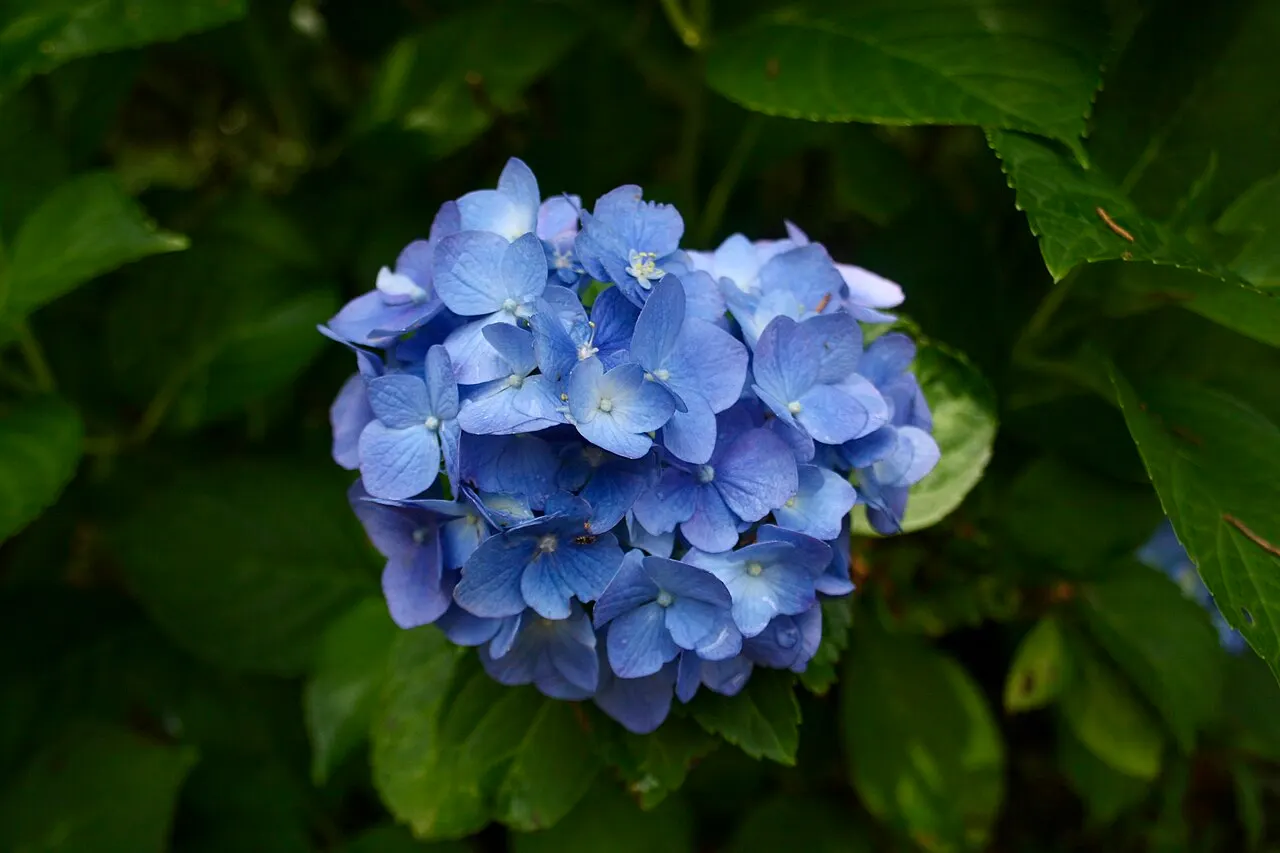

On blue or pink cultivars, the flower colour depends on your soil. The RHS says flowers are blue in acid soil, mauve in slightly acid to neutral soil, and pink in alkaline soil. White, red and green cultivars do not change with pH.
Blue-flowered cultivars stay blue in acidic soil at pH 4.5–5, the growing guide says. If they turn purple or pink, it suggests a hydrangea blueing compound containing aluminium sulphate, used as the maker says. This will not work on very alkaline soil, or where you can see pieces of chalk. There, grow blue hydrangeas in containers of peat-free ericaceous compost. Water blue hydrangeas with rainwater where you can, but use tap water if rainwater runs short, so the plant does not suffer drought stress.
For better red or pink flowers, the RHS applies ground limestone or chalk in winter, at 75–100 g per square metre.
Hydrangeas in pots
The RHS says more compact cultivars can be grown in containers. It names *Hydrangea macrophylla* 'Red Hot Violet' and 'Altona'.
For blue flowers on alkaline soil, use ericaceous compost. Otherwise, the RHS mixes two parts peat-free John Innes No 3 with one part peat-free multipurpose compost.
Move pots to a shadier spot in summer so they dry out less. In winter there is no need to wrap the pot, the RHS says. Raise it on pot feet or bricks so it drains. You can move pots to a more sheltered spot, such as a cold greenhouse or against a sheltered, sunny wall, to protect the buds and new growth.
Late frost and the first spring
The RHS says most hydrangeas are hardy across most of the UK, but the young buds may be damaged by late frosts.
On mophead and lacecap hydrangeas (*H. macrophylla*), the RHS says there is no need to remove the faded flowers straight away. The dead blooms help protect the tender new growth below from frost.
If shoots are badly frosted, prune them back to just above the first undamaged pair of buds on live wood.
On mophead and lacecap hydrangeas (*H. macrophylla*) and *H. serrata*, the RHS says the flowers form on new shoots growing from the previous year's stems. Heavy pruning removes the flowers, so it prunes these lightly in mid-spring.
Planting shrubby hydrangeas: the RHS advice at a glance
| What | Advice |
|---|---|
| When to plant | Spring or autumn, soon after you buy the plant |
| Plants in pots | All year, unless the soil is frozen, too wet or excessively dry in summer |
| What you buy | Garden centres: usually 3 litre pots, 30 cm or taller. Mail order: often young cuttings in 9 cm or 1 litre pots |
| Site | Ideally light shade. Sunnier spots if the soil is not too dry in summer. Avoid frost pockets and exposed spots |
| Soil | Moist but well drained, not prone to waterlogging. Well suited to clay soils |
| Planting hole | As deep as the rootball and three times wider. Compost surface level with the soil around it |
| Spacing | 90 cm to 2.4 m, depending on vigour |
| Mulch | A soil improver, leaving a 10–15 cm gap around the base |
| First season | Water from spring to summer whenever there has been no significant rain for 7–10 days |
How to do it
- Plant in spring or autumn, as soon as you can after buying. A hydrangea in a container can also go in at other times, but not when the soil is frozen, too wet, or excessively dry in summer.
- Choose a spot in light shade, away from frost pockets and exposed places, so late frosts do less damage to the new spring growth.
- Water the plant well before planting.
- Dig a hole as deep as the rootball and three times wider.
- Set the plant so the top of its compost is level with the soil around it. Do not plant it too deep.
- Firm the soil around the rootball with the heel of your boot or shoe, then water it in.
- Mulch with a soil improver, leaving a 10–15 cm gap around the base so the soil dries out less.
- Keep the soil damp for the next few weeks. Through the first spring and summer, water whenever there has been no significant rain for 7–10 days.
Common questions
Is it better to plant hydrangeas in spring or autumn?
The RHS says the best time to plant shrubby hydrangeas is spring or autumn, and does not prefer either. Plant soon after you buy the plant.
Can I plant a hydrangea in summer?
A container-grown one, yes. The RHS says containerised plants can be planted all year, as long as the soil is not frozen, too wet, or excessively dry in summer.
Can hydrangeas grow in full sun?
The RHS says light shade is ideal. A sunnier spot is fine if the soil is not too dry in summer. Its plant guide warns that very dry soil and full sun can lead to leaf scorch and poor flowering.
How far apart should I plant hydrangeas?
The RHS gives 90 cm to 2.4 m, depending on how vigorous the hydrangea is. Check the eventual size on the label.
How do I keep a hydrangea blue?
The RHS says blue cultivars stay blue in acid soil at pH 4.5–5. Water with rainwater where you can. On very alkaline or chalky soil, grow them in pots of peat-free ericaceous compost.
How deep should I plant a hydrangea?
Dig the hole as deep as the rootball and three times wider, the RHS says. The compost surface should be level with the soil around it. Avoid planting too deep.
Sources
We wrote this page using the sources below.
- How to grow shrubby hydrangeas, Royal Horticultural Society (RHS)
- Shrubby hydrangeas (plant guide), Royal Horticultural Society (RHS)