
 Roses Diseases and pests
Rose diseases and pests
Dark spots, white powder or orange pustules on the leaves? Compare what you see with the photos and find out what the RHS advises.
In short
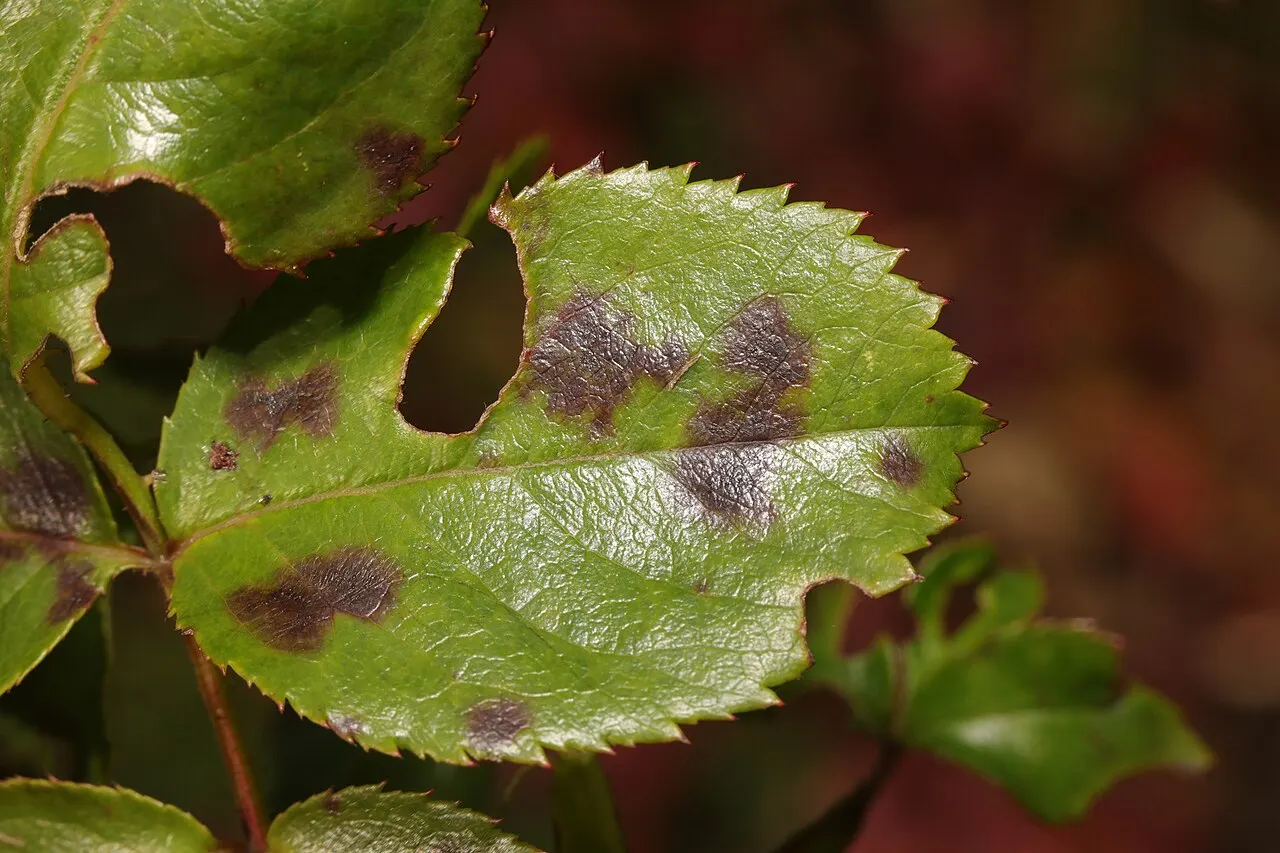
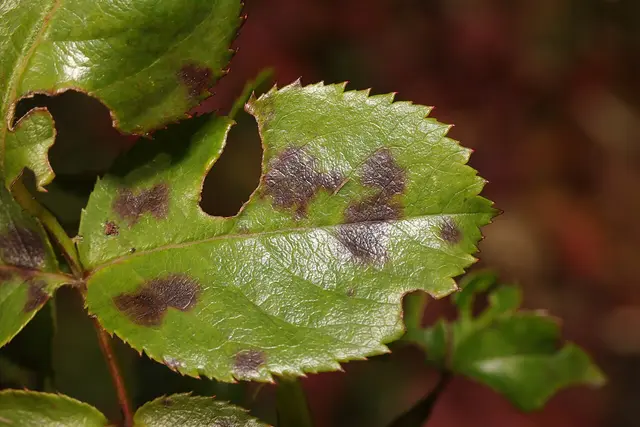
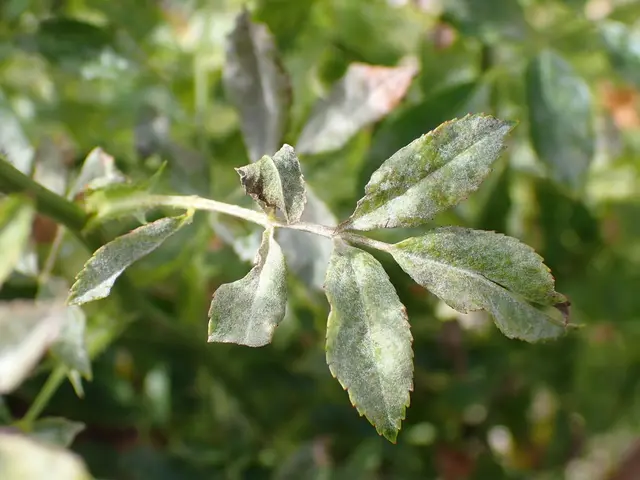
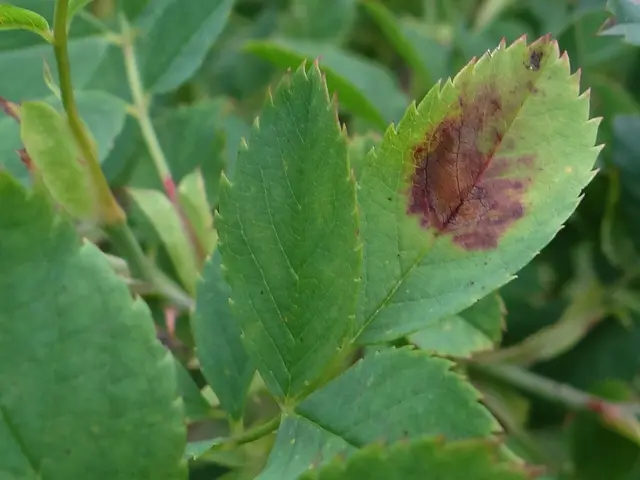
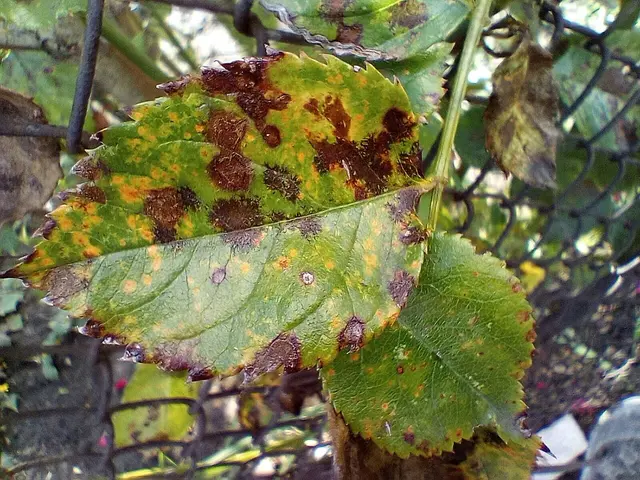
The RHS names aphids, black spot, powdery mildew, rose dieback and leaf-rolling sawfly as the most common rose problems. Dark spots with yellowing, falling leaves mean black spot. Greyish white powder means powdery mildew. Orange pustules under the leaves mean rust.
What problem can you see?

Healthy roses start with the right spot
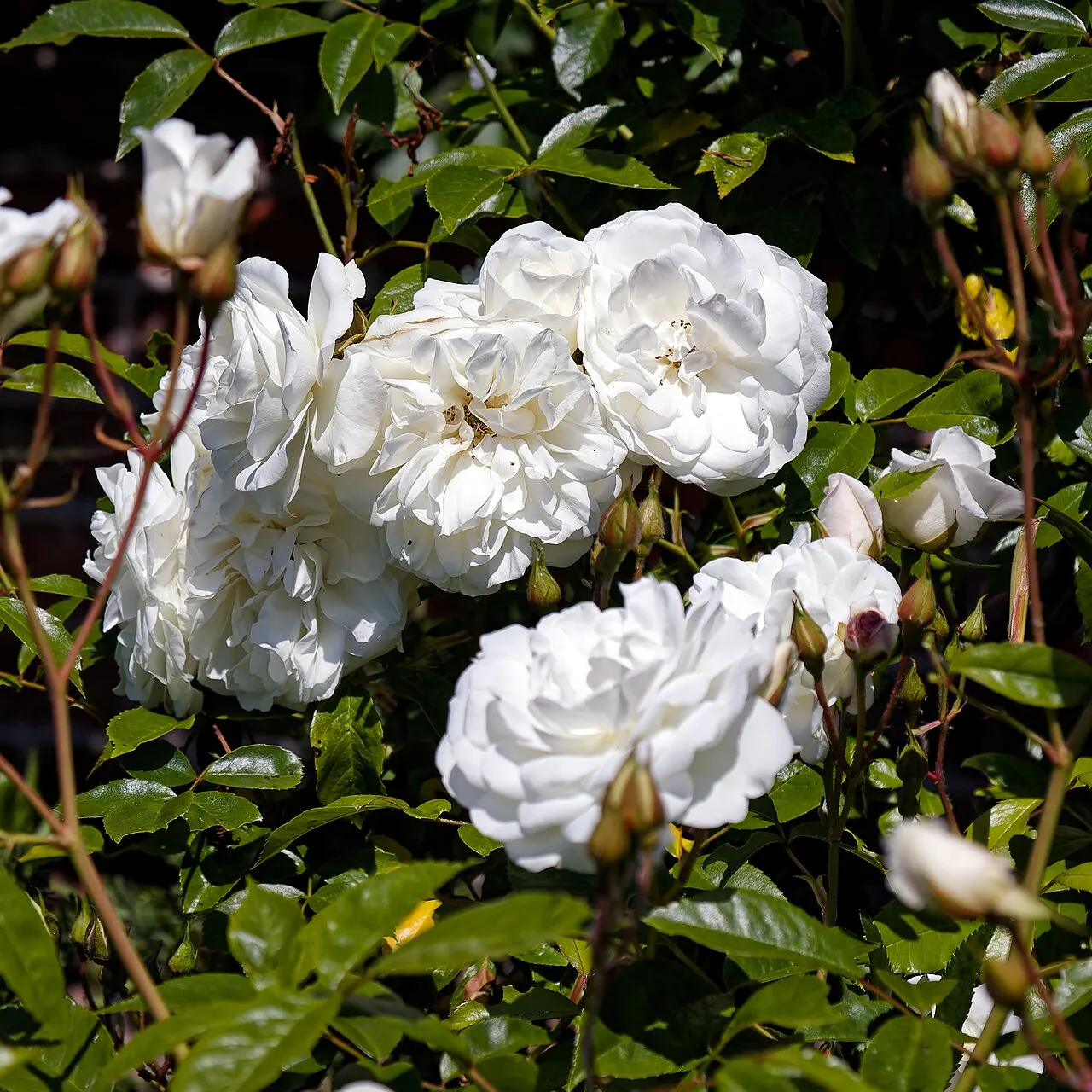

On its black spot and powdery mildew pages, the RHS puts good cultivation, choice of cultivar, garden hygiene and natural enemies first. Several of these habits help against more than one problem.
Sun and moving air. The RHS powdery mildew guide plants roses in full sun where possible. Climbers and ramblers trained close to walls or in sheltered corners sit in still, humid air and are often heavily infected, so it suggests arches, rope swags or pergolas instead. Do not plant too densely, and prune to an open structure.
Steady water and food. Plants under intermittent drought stress are more prone to powdery mildew, the RHS says. Water regularly in dry spells and mulch to keep moisture in. Feed regularly but avoid too much nitrogen, because soft growth is easily attacked.
Hygiene. Collect fallen leaves, remove diseased growth promptly and clean your tools. The RHS adds that over-tidying discourages wildlife, so find a balance. How to plant a rose so it starts well is on our page when to plant roses.
Black spot: why clearing leaves helps only so much
Black spot is caused by *Diplocarpon rosae*. The RHS says its strains are highly diverse and new ones arise rapidly. The fungus overwinters on fallen leaves and in young stems and buds, then makes new spores in spring.
So the RHS routine is simple. In autumn, collect and destroy fallen leaves, or bury them under mulch. From November to February, lay a mulch at least 5 cm thick and pick off any leaves left on the bush where practical. In spring, before the leaves appear, cut out all stem lesions.
The RHS is honest about the limits. These steps delay the disease, but spores are bound to blow in on wind-blown rain from elsewhere. Most UK summers are wet enough for black spot to build up.
Resistant roses. Newer cultivars that claim resistance may give a few years' respite, the RHS says, but the resistance bred into new cultivars usually fails to last. Older species roses are little affected.
Powdery or downy mildew? They need opposite weather
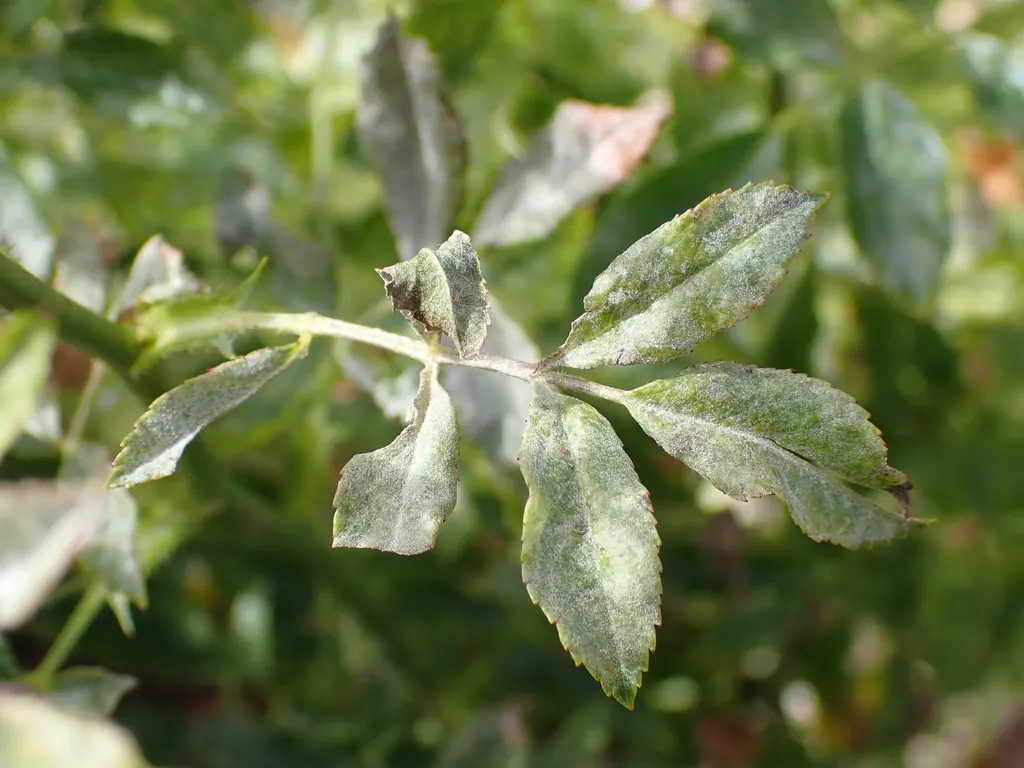
The two mildews have similar names but behave differently, according to the RHS. Its powdery mildew advice is written for roses. Its downy mildew advice comes from a general guide covering many plants, which names rose among them.
| Powdery mildew | Downy mildew | |
|---|---|---|
| Cause | *Podosphaera pannosa* | *Peronospora sparsa* |
| What you see | White powder on leaves, shoots, buds and thorns | Purple blotches on top of the leaf, sparse growth underneath |
| Weather | Often a problem in dry summers, humid still air | Severe outdoor outbreaks only likely in wet summers (general downy mildew guide) |
| Watering | Overhead in mid-morning in dry weather can reduce it | Water early in the morning so leaves dry quickly (general downy mildew guide) |
| Fungicides | The RHS recommends that you don't use them | None available to amateur gardeners |
Powdery mildew overwinters on stems and in dormant buds. In spring, shoots from those buds are quickly covered in mildew, and the fungus spreads from them to the rest of the plant. That is why the RHS cuts out shoots with large patches of mildew around the thorns in spring pruning.
For powdery mildew, the RHS says there are big differences between cultivars, but claimed resistance may not last the lifetime of the plant or work in every locality.
Rust and dieback
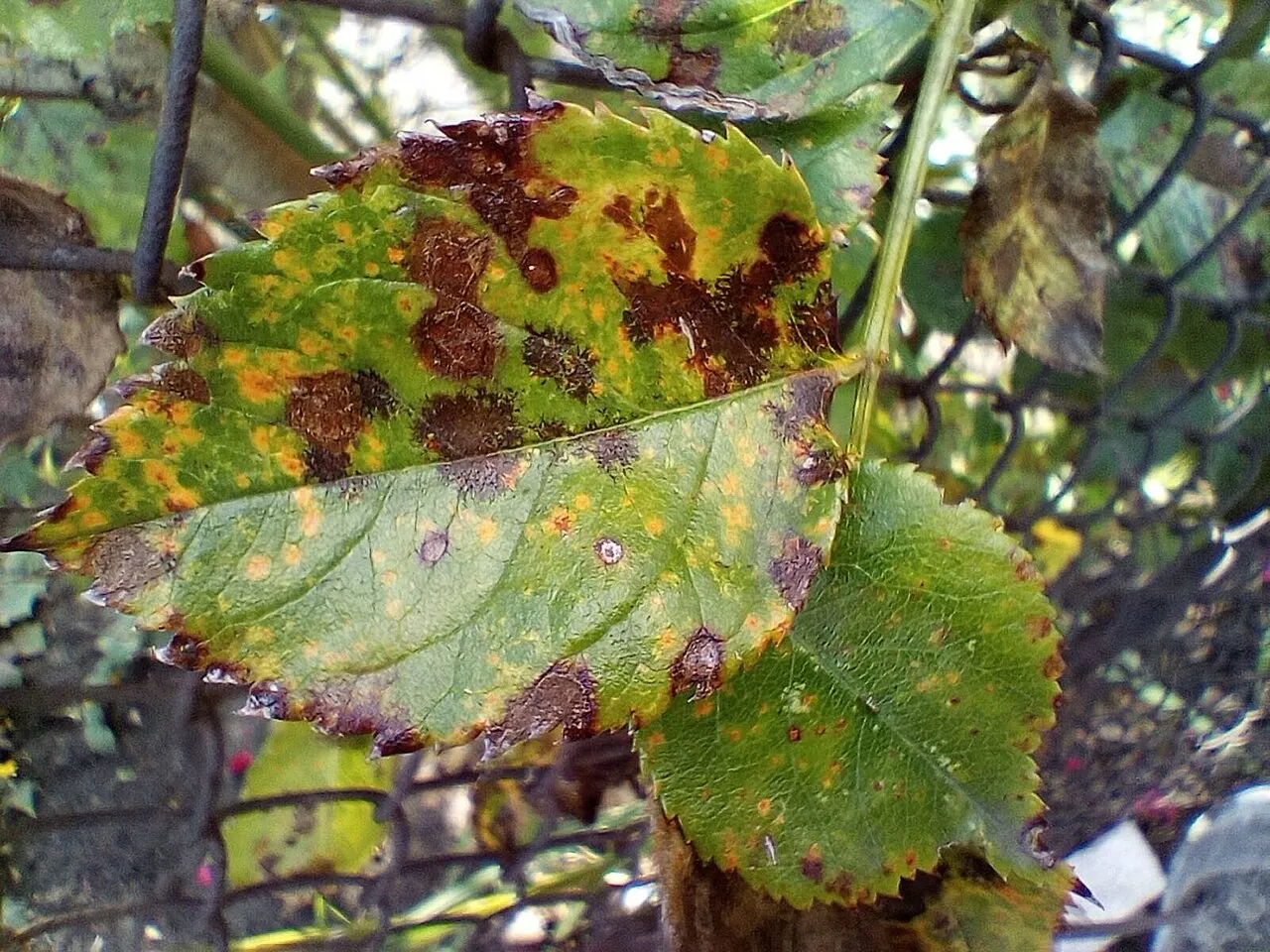

Rose rust is the least serious of the common rose diseases, the RHS says, behind black spot and powdery mildew. Look for yellow spots on top of the leaves and orange pustules underneath, which later turn black. Prune out spring infections early and clear fallen leaves in autumn. Many modern roses should be resistant.
Rose dieback is not an uncommon sight on roses, says the RHS. It can follow frost, bad pruning, waterlogged or dry soil, root disease, severe leaf diseases or replant disease. Fungi such as grey mould and rose canker then move into the weakened wood. Cut out dead wood as soon as you see it, just above an outward facing bud. Do not leave long stubs, because the RHS links them to dieback.
If you are replanting where roses grew before, the RHS dieback guide changes the soil to at least 30 cm deep and 60 cm wide.
Pests the RHS asks you to tolerate

Most rose pests do less harm than they look, the RHS says.
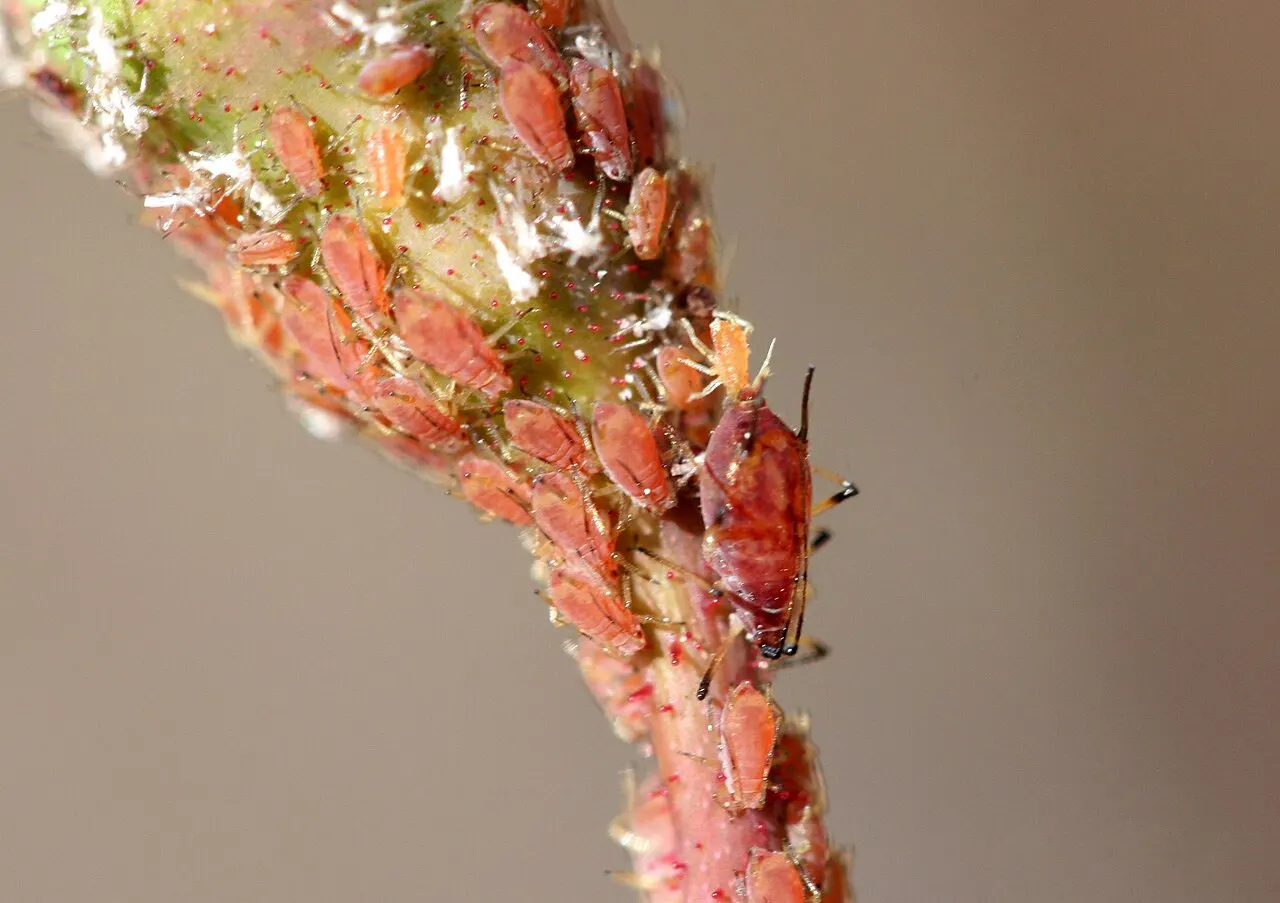
Aphids build up in spring before predators catch up, but ladybirds, hoverflies, parasitoid wasps and earwigs normally reduce numbers during summer. Squash early colonies and tolerate the rest where possible.
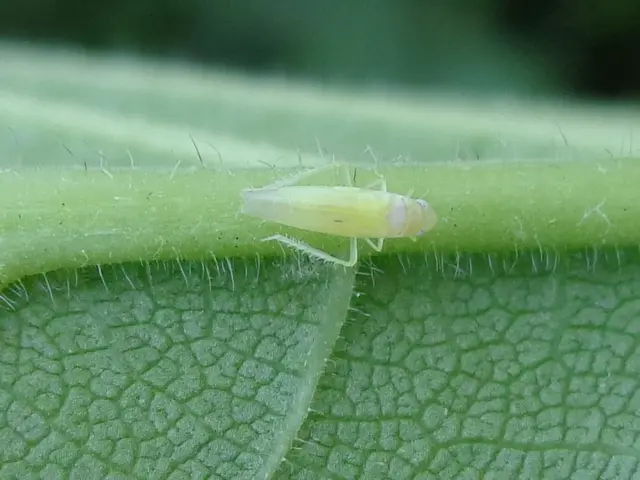
Leafhoppers leave pale mottling that often has no effect on vigour or flowering. Leaf-rolling sawfly rolls leaves into tubes from late April to early June, but roses usually recover and flower well. Large rose sawfly larvae can strip leaves in early and late summer, yet healthy roses can cope with some defoliation.
Two signs are not pests at all. Neat semicircular cuts are made by leaf-cutter bees and need no control. Small, discoloured, strap-like leaves are most commonly weedkiller damage from glyphosate, the RHS rose FAQ says, and less often a virus.
What about sprays?
The RHS says it doesn't support the use of pesticides. On its rose disease pages it recommends that you don't use fungicides, because they may reduce biodiversity and affect soil health.
If chemical controls are used, the RHS says they should be a last resort, used in a minimal, highly targeted way. Only pesticides approved for home gardeners are legal to buy, and following the label is a legal requirement. The RHS advises against household products such as vinegar or washing-up liquid as pesticides.
For several problems there is nothing to spray anyway. The RHS says there are no fungicides available to amateur gardeners for downy mildew, none approved for grey mould and no chemical controls for rose dieback.
Quick check by symptom (RHS)
| What you see | Likely cause |
|---|---|
| Purplish or black patches on top of the leaves, yellowing, leaves drop early | Black spot |
| White powdery growth on leaves, shoots and buds | Powdery mildew |
| Purple blotches on top of the leaves, leaves yellow and fall | Downy mildew |
| Yellow spots above, bright orange pustules on the underside | Rose rust |
| Shoots, branches or the whole plant die back | Rose dieback |
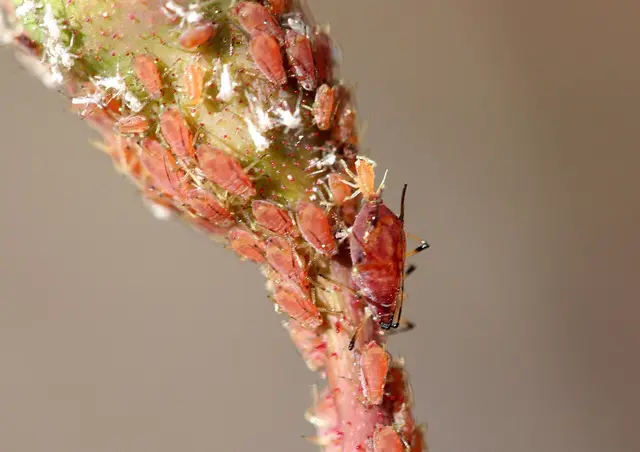
| Green or pink insects on buds and shoot tips, sticky leaves | Rose aphids |
| Pale mottling on top of the leaves | Rose leafhopper |
| Leaflets rolled tightly into tubes | Rose leaf-rolling sawfly |
| Leaves eaten by groups of pale green larvae with black spots | Large rose sawfly |
| Double flowers turn brown and do not open | Flower balling, usually after cool, wet weather |
Rose black spot
- How to spot it
- A rapidly enlarging purplish or black patch on the upper side of the leaf, often with yellowing around it. The leaf usually drops early. Small, black, scabby lesions can appear on young stems.
- What causes it
- The fungus Diplocarpon rosae. Its spores spread in water, so wet weather is needed for the disease to build up. The RHS says most UK summers are wet enough. It overwinters on fallen leaves and on young stems and buds.
- What to do
- Collect and destroy fallen leaves in autumn, or bury them under a mulch. Pick off leaves left on the plant over winter where practical. Remove all stem lesions in spring, before the leaves appear.
- How to prevent it
- Mulch the soil at least 5 cm thick between late autumn and late winter (November to February). The RHS says older species roses are little affected, while popular hybrid teas, floribundas, climbers and patio roses are often susceptible.
Is it serious? Badly affected plants can lose almost all their leaves, and their vigour drops sharply.
↑ Back to the listRose powdery mildew
- How to spot it
- White, powdery growth on leaves, shoots, buds and petals, on either side of the leaf. Affected leaves may turn yellow, reddish or purple. Heavily infected young leaves curl and buds often fail to open. On stems the growth is thicker and often surrounds the thorns.
- What causes it
- The fungus Podosphaera pannosa. Unlike many fungi it does not need wet leaves, so it is often a problem in dry summers. Humid, still air, dry soil, drought stress and soft growth from too much nitrogen all make attack more likely.
- What to do
- Prune out badly affected shoots as soon as you see symptoms and dispose of them. In routine spring pruning, cut out shoots with large patches of mildew around the thorns.
- How to prevent it
- Plant in full sun with good air movement. Climbers and ramblers against walls are often heavily infected, so the RHS suggests arches, swags or pergolas. Water regularly in dry spells, mulch, feed without too much nitrogen and do not plant too densely.
Rose downy mildew

- How to spot it
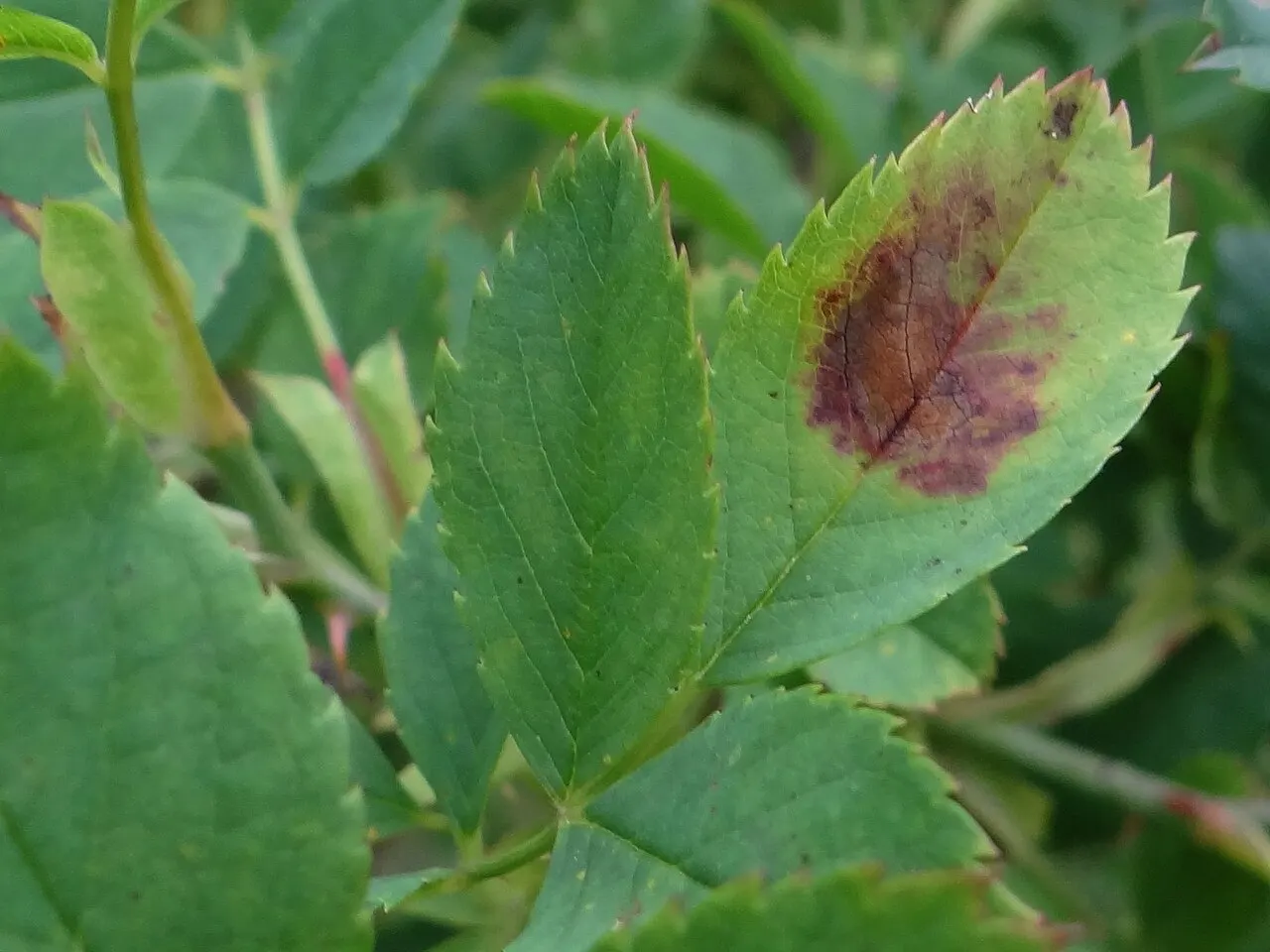
- Purple blotches on the upper side of the leaf. The growth underneath is sparse and hard to see, even with a hand lens. Severely affected leaves turn yellow and fall early.
- What causes it
- Peronospora sparsa. The RHS downy mildews guide, which covers many plants, not only roses, says severe outbreaks outdoors are only likely in wet summers.
- What to do
- Pick off affected leaves as soon as you see symptoms. Remove and destroy severely affected plants. The RHS says there are no fungicides available to amateur gardeners against downy mildews.
- How to prevent it
- The same general downy mildews guide advises avoiding dense planting, controlling weeds for good air circulation, and watering early in the morning rather than in the evening, so leaves dry quickly.
Rose rust
- How to spot it
- Yellow spots on the upper side of the leaves with orange spore pustules underneath. The pustules later turn black and leaves may fall early. In spring, young green stems can be distorted with large pustules of bright orange spores.
- What causes it
- The fungus Phragmidium tuberculatum and some close relatives. It affects only roses. The RHS calls it the least serious of the common rose diseases.
- What to do
- Prune out spring infections as soon as you see them. Collect and destroy fallen leaves in autumn to reduce the resting spores that overwinter.
- How to prevent it
- Susceptibility varies widely, and the RHS says many modern roses should be resistant. If rust keeps coming back, consider replacing the rose, but remember the risk of replant disease in the same spot.
Is it serious? Rarely severe. The RHS says most infections are light enough not to need control.
↑ Back to the listGrey mould

- How to spot it
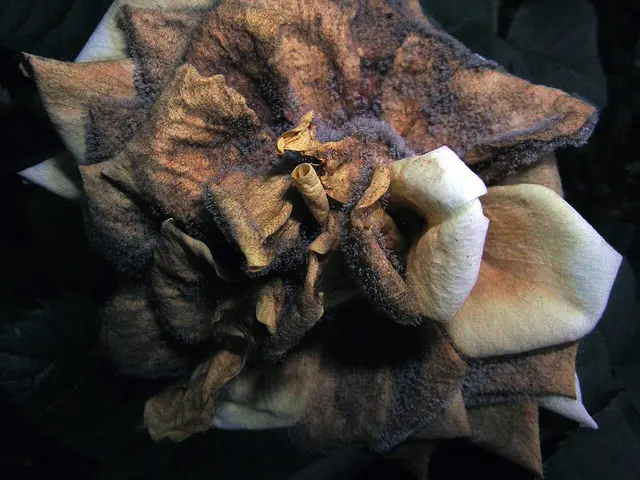
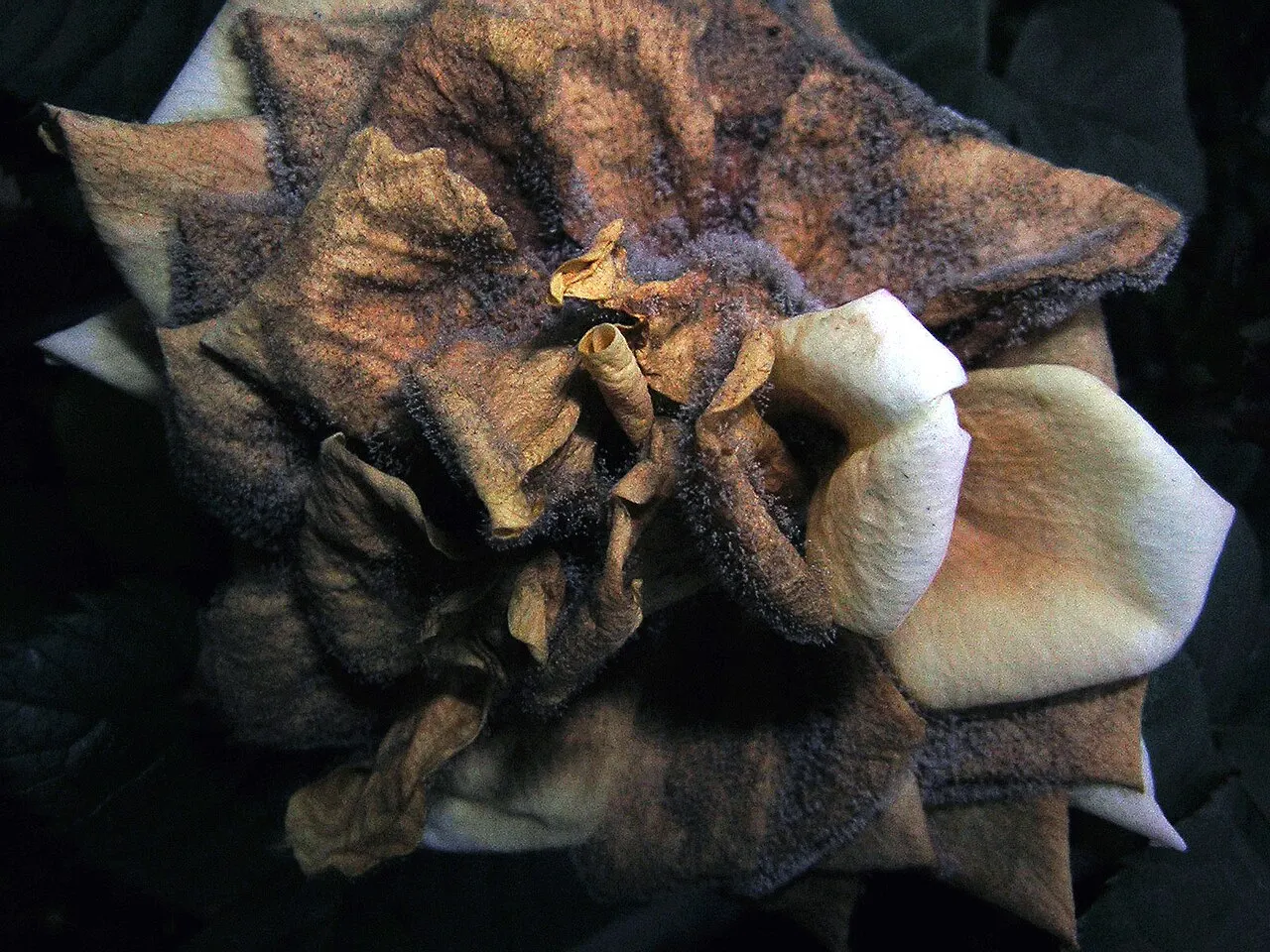
- Fuzzy grey brown mould on decaying buds, leaves or flowers in humid conditions. Buds and flowers shrivel and die.
- What causes it
- The fungus Botrytis cinerea, favoured by high humidity, crowded plants and poor ventilation. The RHS rose FAQ says it also colonises weakened or damaged rose branches and causes dieback.
- What to do
- Remove dead and dying leaves, buds and flowers promptly. Bag them as you take them off, because the spores scatter easily. The RHS says no fungicides are approved for use against grey mould by gardeners.
- How to prevent it
- Improve ventilation and do not overcrowd plants.
Rose dieback
- How to spot it
- Young shoot tips brown in spring, browning spreads down from a pruning stub, or twigs, branches and even the whole plant die back. Tiny black fruiting bodies can form on the dead wood.
- What causes it
- Weather, poor care, disease or a mix. The RHS lists frost, soil that is too wet or too dry, poor pruning, rubbing branches, severe black spot, rust or mildew, root diseases and replant disease. Burying the graft union has been reported to raise the risk.
- What to do
- Remove dead and damaged wood as soon as you see it. Cut cleanly just above an outward facing bud, sloping away from it. The RHS says there are no chemical controls for rose dieback.
- How to prevent it
- Plant in well-prepared soil with the roots spread out and the graft union not buried. Feed in spring, mulch and avoid soil prone to drought or waterlogging.
Rose aphids
- How to spot it
- Green or pink insects up to 3.5 mm long cluster on flower buds, shoot tips and young leaves. Buds and leaves get sticky with honeydew, and black sooty mould can grow on it. White cast skins lie on buds and leaves.
- What causes it
- Mostly Macrosiphum rosae. Numbers rise in spring and peak in early summer. They overwinter as eggs on the stems.
- What to do
- Squash colonies between finger and thumb where practical. Check roses often from spring onwards so you can act early.
- How to prevent it
- Encourage ladybirds, ground beetles, hoverflies, parasitoid wasps and earwigs. The RHS says natural enemies normally reduce numbers during summer, and advises tolerating aphids where possible.
Rose leafhopper

- How to spot it
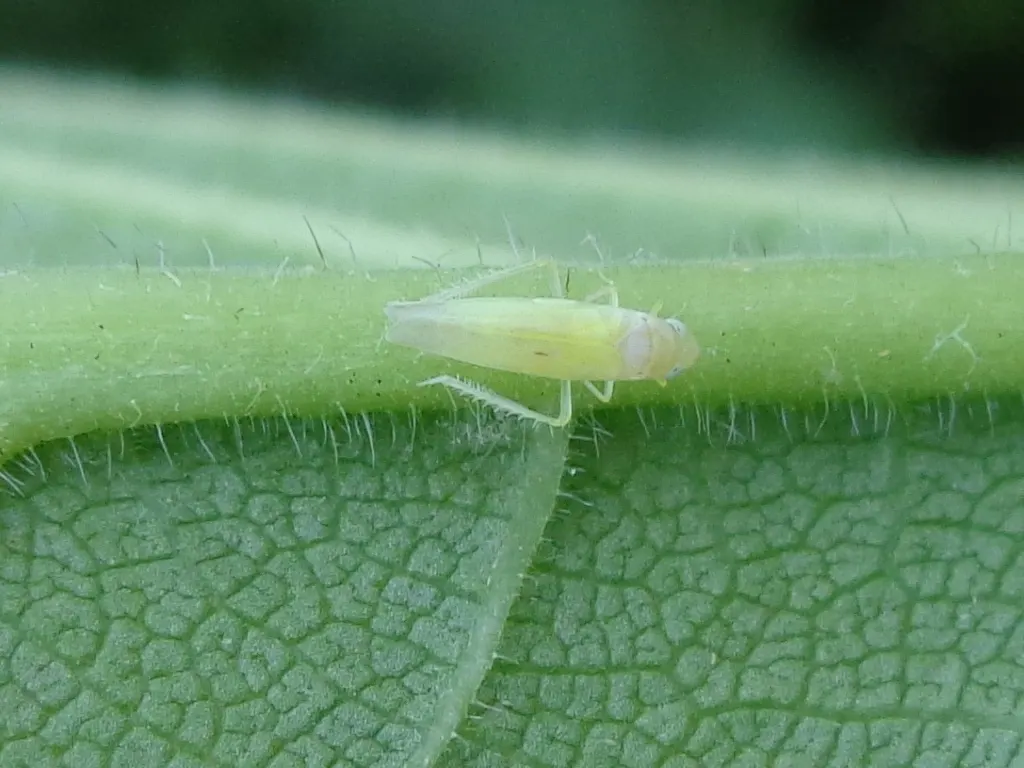
- Pale mottling on the upper side of the leaves, which can spread until the leaves look blanched. With large numbers, leaves occasionally brown and drop early, but the RHS says that is unusual.
- What causes it
- Edwardsiana rosae, pale yellow adults 3.5–4 mm long. Eggs hatch in May, the nymphs feed under the leaves, and adults appear in July and lay eggs for a second generation.
- What to do
- The RHS says to tolerate the mottling, because it often has no effect on vigour or flowering.
- How to prevent it
- Encourage birds, ladybirds, wasps and ground beetles.
Rose leaf-rolling sawfly
- How to spot it
- Leaf edges curl down and inwards until the leaflets form tight tubes. Pale green larvae up to 10 mm long feed inside. The rolled leaves can stay on the plant all summer.
- What causes it
- Blennocampa phyllocolpa. Eggs are laid and leaves roll from late April to early June. Larvae go into the soil in late June and July. There is one generation a year.
- What to do
- Tolerate it where possible. Roses usually recover and flower well. If only a few leaves are affected, pick them off before the larvae finish feeding.
- How to prevent it
- Check plants regularly from late April until early June. Encourage birds, wasps and ground beetles.
Is it serious? Usually temporary, though heavily affected plants may lose vigour.
↑ Back to the listLarge rose sawfly
- How to spot it
- Groups of pale green, caterpillar-like larvae with black spots and yellow blotches, up to 25 mm long, strip the leaves. Egg-laying leaves long scars on soft young stems, which often split.
- What causes it
- Arge pagana and Arge ochropus. A. pagana can have two or three generations between May and October.
- What to do
- Remove larvae by hand if practical. Run a fingernail down the egg scars to destroy the eggs inside.
- How to prevent it
- Check plants regularly from May onwards for egg-laying females, egg scars and larvae.
Is it serious? The RHS says healthy roses can cope with some defoliation.
↑ Back to the listProtection calendar
What to do and when, so you get fewer diseases and pests. Use only plant protection products authorised in the UK, as the label says.
- Spring, before the leaves appearCut out stems with black spot lesions.
- Spring pruningCut out shoots with large patches of powdery mildew around the thorns, and any rust infections as soon as you see them.
- From springCheck buds and shoot tips often for aphids and squash early colonies.
- Late April to early JuneCheck for leaf-rolling sawfly and pick off the few rolled leaves if only a few are affected.
- From MayLook for large rose sawfly egg scars and larvae.
- Dry spellsWater regularly. The RHS says roses under intermittent drought stress are more prone to powdery mildew, and overhead watering in mid-morning can reduce it.
- AutumnCollect and destroy fallen leaves to cut black spot and rust next year.
- November to FebruaryMulch at least 5 cm thick and pick off leaves still on the plant where practical.
Home remedies: what works
The internet is full of folk remedies. Here is what the sources say about them.
- Not studiedHomemade sprays
The RHS does not recommend homemade products, because they are unregulated and usually untested. It advises against using household products such as vinegar or washing-up liquid as pesticides.
- WorksSquashing aphids
The RHS lists squashing colonies between finger and thumb as a control, as long as you check roses often from spring.
- Prevention onlyWatering over the leaves against powdery mildew
The RHS says watering overhead in mid-morning during dry weather can reduce powdery mildew. It also says to avoid overhead watering early in the morning or in the evening, and to avoid leaves staying wet for long periods, which can favour black spot and rust.
- Does not workStripping off all rolled leaves
The RHS says removing large numbers of leaves can harm the rose more than leaf-rolling sawfly does. Only pick them off when a few leaves are affected.
Common questions
What can I spray on roses for black spot?
The RHS recommends that you don't use fungicides. If you do use a chemical control, use it only as a last resort, in a minimal, targeted way, choose a product legally available to UK home gardeners and follow the label. Clearing fallen leaves, mulching and cutting out stem lesions come first.
Will black spot kill my rose?
The RHS says badly affected plants can lose almost all their leaves, and their vigour drops sharply. Clear fallen leaves in autumn, mulch in winter and cut out stem lesions in spring to delay it.
Are disease-resistant roses immune?
No. The RHS says resistance bred into new cultivars usually fails to last against black spot, and claimed resistance to powdery mildew may not persist for the plant's lifetime. For rust it is more positive and says many modern roses should be resistant.
Why are my rose leaves rolled into tubes?
Usually rose leaf-rolling sawfly, the RHS says. Leaves roll from late April to early June. Roses usually recover, so tolerate it, or pick off the rolled leaves if only a few are affected.
Why do my rose buds go brown and not open?
On double roses this is often flower balling, which the RHS says is usually caused by cool, wet weather. Grey mould can also make buds and flowers shrivel in humid conditions.
Why are my rose leaves mottled and pale?
Probably rose leafhopper. The RHS says the mottling often has no effect on vigour or flowering, so it advises tolerating it.
Why are my rose leaves narrow and strap-like?
The RHS rose FAQ says this is most commonly glyphosate weedkiller contamination and less often a virus. Rose rosette virus is not yet confirmed in the UK. Report suspected cases through the UK Plant Health Information Portal.
Sources
We wrote this page using the sources below.
- Rose black spot, Royal Horticultural Society (RHS)
- Rose powdery mildew, Royal Horticultural Society (RHS)
- Rose rust, Royal Horticultural Society (RHS)
- Downy mildews, Royal Horticultural Society (RHS)
- Grey mould, Royal Horticultural Society (RHS)
- Rose dieback, Royal Horticultural Society (RHS)
- Rose aphids, Royal Horticultural Society (RHS)
- Rose leafhopper, Royal Horticultural Society (RHS)
- Rose leaf-rolling sawfly, Royal Horticultural Society (RHS)
- Large rose sawfly, Royal Horticultural Society (RHS)
- Rose problems: frequently asked questions, Royal Horticultural Society (RHS)
- Understanding and avoiding chemical use, Royal Horticultural Society (RHS)