
 Garlic When to sow and plant
When to plant garlic
Garlic needs a proper winter chill to split into cloves. Plant it now and the cold does half the work for you.
In short
Plant garlic from mid autumn to early winter. Most varieties need one to two months at 0–10 °C to form good bulbs, so October to December is ideal and Garden Organic plants until February. On heavy, wet soil, start cloves in modules or plant in early spring.

Garlic: what to do and when
Under cover and outdoors, for UK conditions. The weather differs from year to year and from north to south, so check your local conditions too.
Why garlic is planted before winter
Garlic needs cold. The RHS says that most varieties need one to two months at 0–10 °C to form good bulbs. Without that cold spell the bulb may not divide into cloves at all: the RHS says bulbs that do not divide are usually the result of too little winter cold.
That is why the RHS calls garlic best planted in autumn, with the main window from mid autumn to early winter. Garden Organic plants from November to February and says autumn planting tends to give the bigger crop. BBC Gardeners' World says most varieties are best planted in late autumn or early winter.
So if you are reading this in November, you are right on time. December is still fine, and Garden Organic plants into February.
Heavy soil: plant in modules or in spring
Wet soil is the enemy of garlic. The RHS warns that it raises the risk of disease, especially for cloves planted in autumn, and Garden Organic notes that garlic rots in wet soil.
If your soil is heavy, you have two choices. The RHS and BBC Gardeners' World both suggest planting single cloves in modules in autumn, covering the tip with about 2.5 cm of compost and keeping the trays in a cool, sheltered spot such as a cold frame. Keep the compost slightly moist but not wet, and plant them out in spring.
The other option is to plant straight into the ground in spring. BBC Gardeners' World says early spring may give you more success on heavy soil, and the RHS says some varieties can go in during late winter or early spring. BBC Gardeners' World also describes raised ridges 15 cm high and 20 cm wide, with cloves 15–20 cm apart and 7–10 cm deep.
Hardneck, softneck and elephant garlic
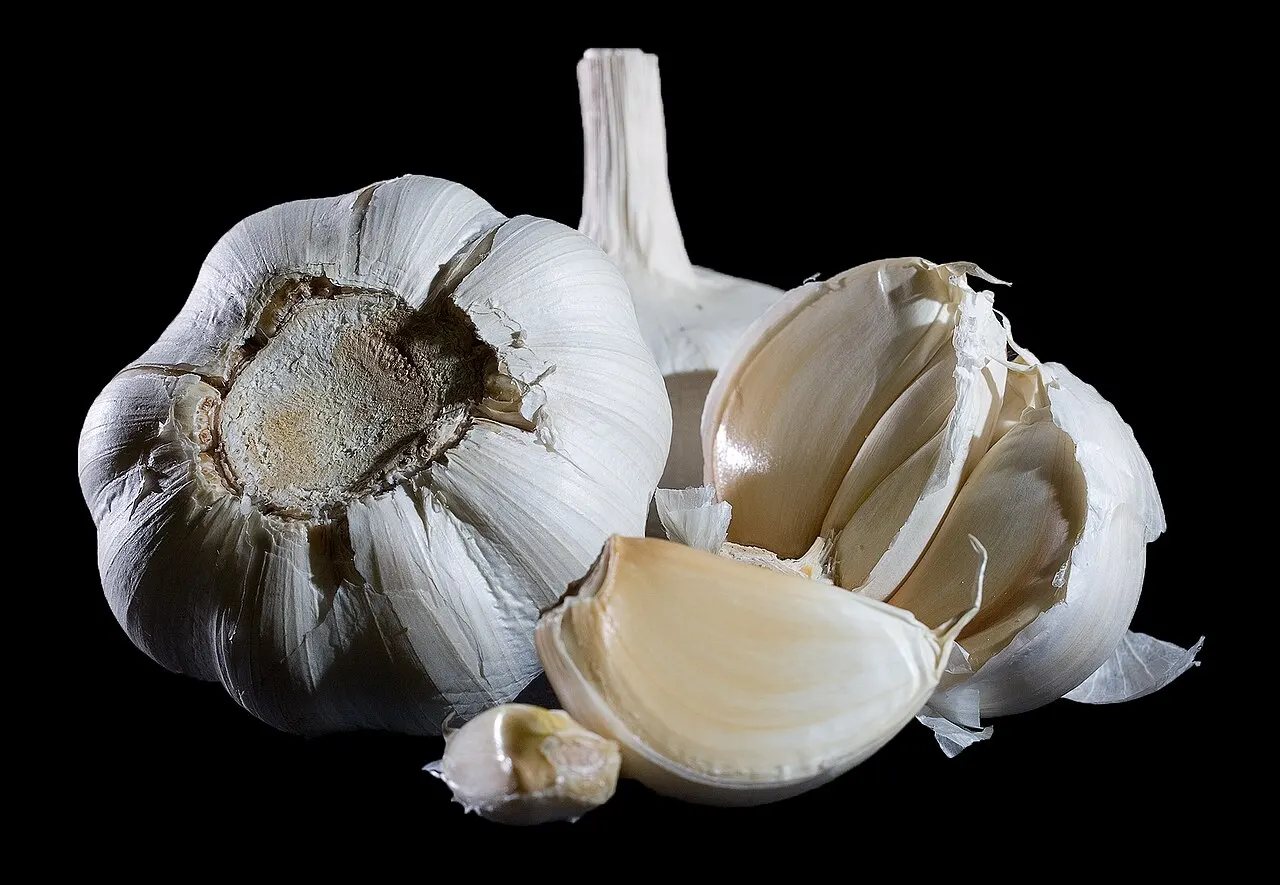

Hardneck garlic has fewer, larger cloves and a stronger flavour. BBC Gardeners' World says it usually has 10 or fewer cloves per bulb, is hardier and can be grown throughout the UK. It readily sends up flower stems and stores for about four to six months, according to the RHS.
Softneck garlic has smaller, tightly packed cloves, up to 18 per bulb according to BBC Gardeners' World. It stores longer, potentially up to a year, says the RHS, and rarely bolts. BBC Gardeners' World notes that it is less tolerant of prolonged cold and does best in the milder southern counties, although it can be grown elsewhere with winter protection.
Elephant garlic is not a true garlic. The RHS explains that it is *Allium ampeloprasum*, a closer relative of leeks, with a few very large, mild cloves. It needs a long, warm season and is best planted in October. Planting early also helps reduce single clove bulbs.
How deep and how far apart
Depth. The RHS plants cloves flat end down with the tip about 2.5 cm below the surface. BBC Gardeners' World says about 3 cm, or deeper in sandy soil or raised beds. Garden Organic plants 2.5 cm deep in heavy clay and up to 10 cm deep in sandy soil. On light soil, deeper planting gives larger bulbs, says the RHS, but avoid it on heavy soil. Planting too shallowly can give green cloves, which are edible but do not store well.
Spacing. The RHS and BBC Gardeners' World use 15 cm between cloves and 30 cm between rows. Garden Organic plants closer, at 10 cm apart in rows 20 cm apart. Wider spacing also helps air move between plants, which BBC Gardeners' World recommends against leek rust.
Soil. The RHS aims for a pH of about 6.5, digs in about two buckets of well-rotted manure or compost per square metre and limes very acidic soil if a test shows it is needed. On no-dig beds it mulches at least 5 cm deep and plants through the mulch.
Garlic in pots
No suitable bed? Garlic grows in containers. The RHS uses pots at least 25 cm deep, with the same spacing and depth as in the ground. BBC Gardeners' World uses pots at least 20 cm wide and deep, with three cloves in a 20 cm pot or five or six in a 30 cm pot, filled with peat-free multi-purpose compost.
Compost in pots dries out quickly, so check it regularly in spring. BBC Gardeners' World feeds pot garlic from April with a high nitrogen feed and stops in mid May.
Through the winter and into spring

Birds like to pull up freshly planted cloves. Both the RHS and BBC Gardeners' World cover the bed with netting or fleece straight after planting and keep it on until the plants have rooted well.
In spring, water in dry spells to help the bulbs swell, says the RHS, and stop once they are large and well formed, as wet conditions can cause rot. Weed by hand, because a hoe can damage the bulbs. Remove any flower stems as soon as they appear so the energy goes into the bulb. Young flower stems are edible: BBC Gardeners' World suggests them for stir fries.
Garlic shares pests and diseases with onions and leeks. The RHS names leek rust, onion white rot, allium leaf miner and onion fly among them.
When will it be ready?
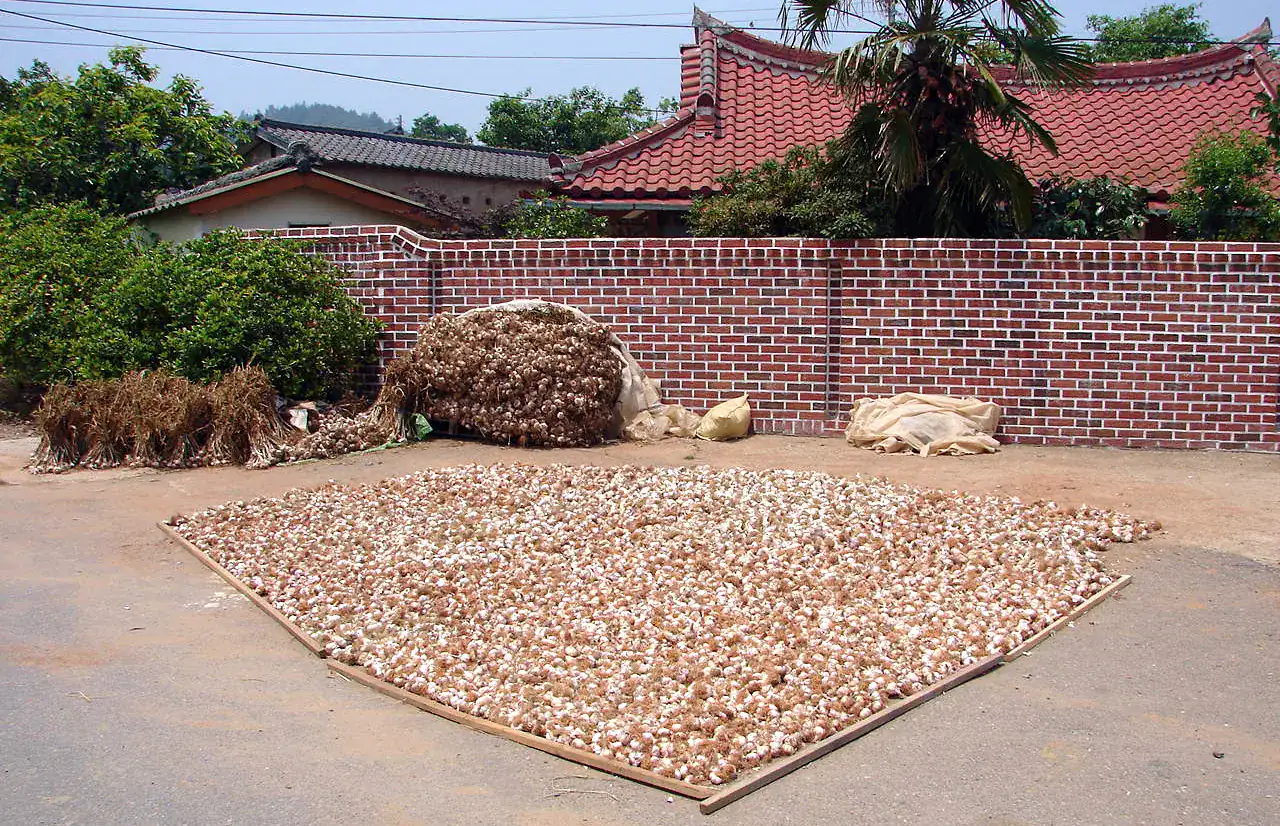
Autumn planted garlic is ready from late spring to early summer, spring planted garlic from mid summer to early autumn, according to the RHS. Garden Organic gives a harvest from May to August and digs up bulbs when the first four to six leaves turn yellow.
Do not leave the bulbs in the ground too long: late lifted bulbs split and store poorly. Lift them gently with a fork. The RHS dries them in a single layer in the sun, ideally in an airy greenhouse below 30 °C, for two to four weeks, then stores them somewhere cool and dry at 5–10 °C.
Cheat sheet: planting garlic
| What | Advice |
|---|---|
| Main planting time | Mid autumn to early winter |
| Cold needed | One to two months at 0–10 °C |
| Spacing | 15 cm between cloves, 30 cm between rows (Garden Organic: 10 cm and 20 cm) |
| Depth | Tip about 2.5–3 cm below the surface, deeper on light soil |
| Heavy or wet soil | Cloves in modules in autumn, planted out in spring |
| Pots | At least 25 cm deep (BBC Gardeners' World: at least 20 cm wide and deep) |
| Harvest | When the leaves turn yellow, from late spring (autumn planting) |
How to do it
- Choose a sunny spot with free-draining soil that does not stay wet in winter. Clear weeds and dig in well-rotted manure or compost.
- Buy named garlic varieties from a garden centre or seed supplier, not supermarket bulbs.
- Split the bulb into cloves just before planting.
- Plant each clove flat end down, with the tip about 2.5 cm below the surface, 15 cm apart in rows 30 cm apart.
- Cover the bed with netting or fleece until the cloves have rooted, so birds cannot pull them up.
- On heavy soil, plant single cloves in modules, keep them in a cold frame and plant them out in spring.
Common questions
Is it too late to plant garlic in November?
No. November sits in the middle of the main window. The RHS plants from mid autumn to early winter and Garden Organic from November to February.
Can I plant garlic in spring?
Yes, some varieties. The RHS says late winter or early spring, and BBC Gardeners' World finds early spring better on heavy soil. Spring planted bulbs are ready from mid summer to early autumn.
Can I plant supermarket garlic?
The RHS advises against it, as it may not suit the British climate and can introduce diseases. Buy named varieties instead.
How far apart should I plant garlic?
The RHS and BBC Gardeners' World use 15 cm between cloves and 30 cm between rows. Garden Organic uses 10 cm and 20 cm.
Why did my garlic not form cloves?
Usually because it did not get enough winter cold. Most varieties need one to two months at 0–10 °C, which is why autumn planting works best.
Sources
We wrote this page using the sources below.
- How to grow garlic, Royal Horticultural Society (RHS)
- How to grow garlic, BBC Gardeners' World Magazine, 2024
- Garlic (growing guide), Garden Organic