
 Carrots Harvest and storage
How to store carrots
A good row of maincrop carrots can feed you until March. The trick is to keep them dark, moist and safe from hard frost, and the simplest store of all is the ground they grew in.
In short
On well-drained soil, leave carrots in the ground and cover the row with a 15 cm layer of straw, cardboard or bracken. The RHS says they keep until March. On wet soil or in cold regions, lift them and store in boxes of moist sand in a frost-free, dark shed.

Carrots: what to do and when
Under cover and outdoors, for UK conditions. The weather differs from year to year and from north to south, so check your local conditions too.
Three ways to keep carrots through winter
Carrots store well, Garden Organic says. The RHS describes three ways to do it.
1. Leave them in the ground under a thick cover and pull them as you need them. 2. Lift them and box them in moist sand, in a shed or cellar. 3. Build a clamp, an outdoor heap of roots covered with straw and soil.
Which one suits you depends on your soil, your winter and how many carrots you have. The RHS says roots are stored from summer to autumn to last through the winter.
This page is about keeping the crop. For sowing dates and varieties, see when to sow carrots.
When to lift carrots for storing
Carrots are ready about 12–16 weeks after sowing, the RHS says. Garden Organic gives an average of 10 weeks for early varieties and 16 weeks for maincrop, and a harvest season from June to November. One sign it suggests looking for is the carrot's shoulders peeking out of the soil.
Early sowings are for eating fresh. The RHS says spring-sown carrots are best young, sweet and crunchy. It is the main-season carrots that are worth storing. They are harvested through summer and into early autumn, the RHS says, and can also be left in the ground into winter.
Carrot fly changes the sums. The RHS storing guide warns that carrot fly can become worse in late summer to early autumn. Its carrot guide says a crop lifted before late August avoids the second generation. So if carrot fly is bad on your plot, an early lift into boxes may save more of the crop than leaving it in the ground.
Leaving carrots in the ground
This is the least work. The RHS says carrots can be left in the ground until needed.
How. In late autumn, remove the leaves and cover the row. The RHS storing guide gives a 15 cm layer of straw, cardboard or bracken, held down with netting or fleece so it does not blow away. Garden Organic also suggests straw or cardboard. The cover protects the roots from frost and, the RHS notes, makes them easier to dig.
How long. Protected like this, carrots will keep until March if necessary, the RHS says.
Where it works. Only on well-drained soil. The RHS does not recommend it on wet soils, and says roots left in the ground are vulnerable to cold damage. If the soil becomes waterlogged over winter, lift the remaining carrots and store them indoors.
Where it does not. The RHS says that in cold regions, indoor storage is necessary. It does not name the regions or give a temperature. As a guide, the colder and wetter your winters, the stronger the case for lifting in autumn.
One more limit: the RHS keeps roots in the ground only until the space is needed for other crops.
Lifting and preparing the roots
Lift with a fork. The RHS says to lift carrots carefully using a fork, to avoid snapping them, especially on heavy soil.
Sort them. Check that the roots are in good condition, the RHS says, and discard or use up any damaged ones.
Remove the leaves. The RHS removes the foliage, and in a clamp it says top growth is removed to avoid rot. Garden Organic's carrot guide twists the leaves off, while its harvest and storage article snips them. Either way, the tops come off.
Shake off loose soil. That is all the cleaning the RHS asks for before storing.
Storing carrots in boxes of sand
Some roots lose moisture and shrivel in store. The RHS lists carrots among them, with celeriac, swedes and beetroot, and packs them to stop it.
The method. Store them in layers of moist sand or a peat-substitute, in boxes. The RHS carrot guide says a crate or box keeps carrots in good condition through late autumn and into winter.
The place. A frost-free, dark place such as a shed or cellar, the RHS says.
None of the sources read for this page gives a storage temperature in degrees or a spacing between the roots, so we have not added one. They agree on the principle: moist, dark and free of frost.
Building a clamp
A clamp is the traditional answer when you have a lot of roots and little space indoors. The RHS gives these steps.
1. Choose a sheltered, well-drained site. Near a house wall is suitable. 2. Dig a trench around the area to help drainage. 3. Make a base layer of light, sandy soil or sand, 20 cm deep, and cover it with straw. 4. Remove the top growth from the roots. 5. Stack the roots in a pyramid, with the largest at the bottom. 6. Cover with a 20 cm layer of straw, then a 15 cm layer of soil. Leave a tuft of straw poking out of the top as a chimney. 7. Aim for a height of around 1 m, and pat the soil smooth so that rain runs off.
Garden Organic describes a clamp in much the same way: 20 cm of sand, a layer of straw, the largest roots at the bottom, then straw and a layer of soil to keep out frost. It says that, given the right conditions, roots in a clamp can last from autumn to spring.
The RHS adds a warning. Rodents can cause problems in clamps.
In the kitchen: fridge and freezer
For carrots in the kitchen, Love Food Hate Waste says to keep them at the bottom of the fridge. Keep them in their packaging or a suitable bag, and remove any leafy green tops first. Cooked carrots go in an airtight container in the fridge for up to 2 days.
Freezing. Garden Organic says root crops can be peeled, chopped, blanched and frozen. Its blanching method is boiling water for three minutes, then a bowl of iced water. Love Food Hate Waste chops or dices carrots and freezes them on a tray until solid before bagging them.
How long frozen carrots keep: the sources differ widely. Garden Organic, writing about roots that are peeled, chopped and blanched, gives 8–12 months in a freezer. Love Food Hate Waste, writing about cooked or uncooked carrots frozen without blanching, says up to 2 weeks. Neither explains the gap, and we could not find a third UK source to settle it. If you want carrots to last for months in the freezer, blanch them first, as Garden Organic does.
What goes wrong in storage
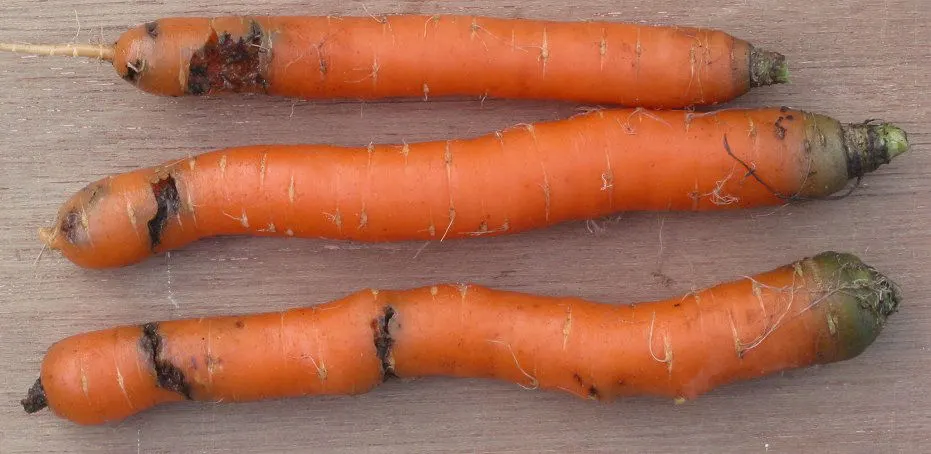

Rot. The RHS says storage rots can affect roots kept in inadequate conditions. Damaged roots are the weak point. Its carrot guide explains that carrot fly larvae tunnel into the roots and leave holes that are susceptible to rotting. Keep those roots out of the store.
Shrivelling. Carrots lose moisture, which is why the RHS packs them in moist sand.
Frost. Roots left in the ground are vulnerable to cold damage, the RHS says. That is what the 15 cm cover is for.
Waterlogging. If the soil becomes waterlogged over winter, the RHS lifts the remaining carrots and stores them.
Rodents. The RHS says rats, mice and voles may need control where roots are stored, especially in clamps.
Other roots you can store the same way
The RHS storing guide covers the neighbours of carrots too. The figures differ a little from crop to crop.
- Beetroot. Cover with a 30 cm layer of straw, cardboard or bracken. Protected, it can last until March. It also stores in boxes of moist sand. - Parsnips. Lift when needed. The RHS says their flavour improves as frosts start to turn starch into sugar. Protect the ground from freezing. - Swedes. A 15 cm layer of straw or bracken. They can last until March. - Turnips. A 15 cm layer of straw or bracken. Best used before late winter. - Celeriac. Best fresh from the ground, but it can be stored in moist sand in boxes. - Salsify and scorzonera. Extremely hardy. Leave in the ground and use as needed until March.
Potatoes are a different matter, and the RHS covers them separately.
Three ways to store carrots
| Method | How | Good for |
|---|---|---|
| In the ground | Remove the leaves, cover with a 15 cm layer of straw, cardboard or bracken | Well-drained soil; keeps until March |
| Boxes | Layers of moist sand or peat-substitute, in a frost-free, dark shed or cellar | Wet soil, cold regions, ground needed for other crops |
| Clamp | 20 cm sand base, straw, a pyramid of roots, 20 cm straw, 15 cm soil, about 1 m high | Large crops and little indoor space |
| Fridge | At the bottom of the fridge, leafy tops removed | Carrots already in the kitchen |
How to do it
- Choose a method. Well-drained soil suits leaving carrots where they are. Wet soil or a cold region calls for boxes.
- To leave them in the ground, remove the leaves in late autumn and cover the row with a 15 cm layer of straw, cardboard or bracken.
- To store indoors, lift the roots carefully with a fork so they do not snap.
- Sort them. Store only roots in good condition. Use up or discard any that are damaged.
- Remove the foliage and shake off the loose soil.
- Pack the roots in layers of moist sand or a peat-substitute in a box.
- Keep the box in a frost-free, dark place such as a shed or cellar.
Common questions
Can I leave carrots in the ground over winter?
Yes, on well-drained soil. The RHS covers them with a 15 cm layer of straw, cardboard or bracken and says they will keep until March. It does not recommend this on wet soils, and says indoor storage is necessary in cold regions.
How do you store carrots in sand?
Lift them, remove the foliage and shake off loose soil. The RHS packs sound roots in layers of moist sand or a peat-substitute in boxes, kept in a frost-free, dark place such as a shed or cellar.
Should I wash carrots before storing them?
The RHS storing guide only says to shake off loose soil. It does not mention washing.
How long do stored carrots last?
The RHS says carrots left in the ground under cover keep until March if necessary. Garden Organic says roots in a clamp can last from autumn to spring, given the right conditions.
Should I cut the tops off carrots before storing?
Yes, remove the foliage. Garden Organic's carrot guide twists the leaves off, and its storage article snips them. The RHS says top growth is removed to avoid rot.
What is a carrot clamp?
An outdoor store: a pyramid of roots on a 20 cm base of sand and straw, covered with 20 cm of straw and 15 cm of soil, about 1 m high, the RHS says. Rodents can be a problem.
Sources
We wrote this page using the sources below.
- Root vegetables: storing, Royal Horticultural Society (RHS)
- How to grow carrots, Royal Horticultural Society (RHS)
- How to grow carrot (growing guide), Garden Organic
- Bust a glut: how to harvest and store your veg, Garden Organic
- Carrots: how to store and use them, Love Food Hate Waste