
 Apricots When to sow and plant
When to plant apricot trees
Apricots flower early in spring, when frost and a lack of insects can cost you the crop. Where you plant matters as much as when.
In short
The RHS says the best time to plant an apricot tree is autumn, when the soil is warm and damp. Any time from November to March, while the tree is dormant, is also fine. Plant against a south, south-west or west-facing wall or fence, away from heavy frosts.
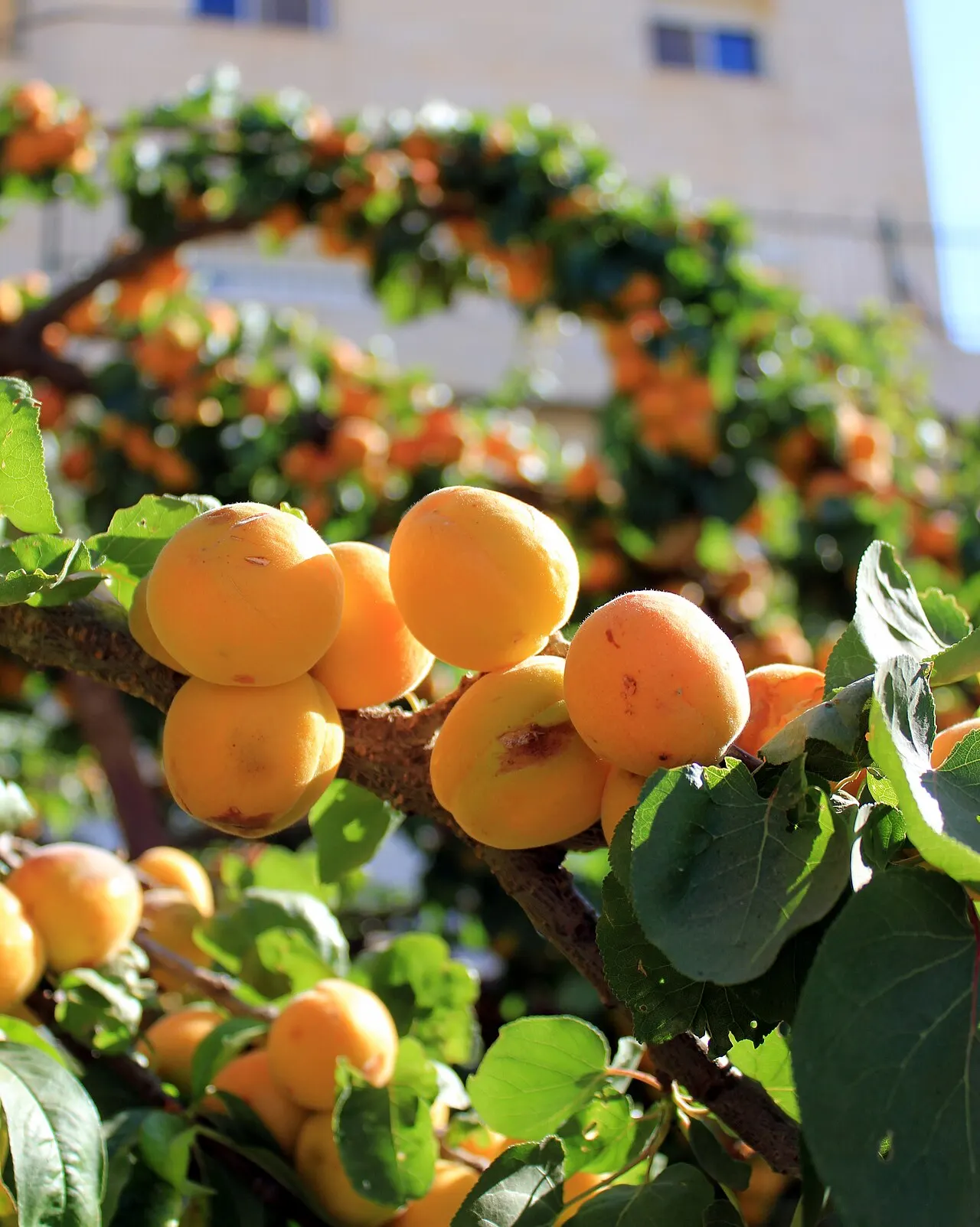

Apricots: what to do and when
Under cover and outdoors, for UK conditions. The weather differs from year to year and from north to south, so check your local conditions too.
After planting: what comes next
Watering. The RHS waters newly planted apricots regularly during dry spells for the first couple of years. A fan against a wall may need more, because the soil at the base of a wall is often dry.
Pruning. The RHS prunes newly planted trees in early spring and established trees after fruiting. Like all stone fruits, apricots should only be pruned in spring or summer, to minimise the risk of infection by silver leaf disease and bacterial canker.
Frost. It is important to protect apricot blossom from frost, the RHS says, otherwise you may not get any fruit. If frost is forecast during flowering, cover the tree overnight with biodegradable fleece, hessian or an old bedsheet, supported on bamboo canes so it does not touch the flowers. Uncover it during the day so sunlight and pollinators can reach the flowers.
Pots. The RHS grows apricots in large pots, at least 45 cm in diameter.
Picking. The RHS says apricots are ready from late July to August. Ripe fruits are soft, rich in colour and come away easily from the tree.
Cheat sheet: planting an apricot tree
| What | Advice |
|---|---|
| When | Best in autumn, when the soil is warm and damp. Also any time from November to March while dormant (RHS) |
| Bare-root trees | Often cheaper, only available from late autumn to early spring (RHS) |
| Container trees | Can go in at other times, but may not settle in as readily (RHS) |
| Site | A south, south-west or west-facing wall or fence, not prone to heavy frosts (RHS) |
| Soil | Deep, fertile, moisture-retentive but well-drained (RHS) |
| Against a wall | Roots about 30 cm from the base, tree angled slightly towards it (RHS) |
| Graft union | Do not bury it (Garden Organic) |
| Space for a fan | A fan can eventually be 3.5–5 m wide (RHS) |
| Pollination | Self-fertile, one tree is enough, but hand pollinate (RHS) |
| Pruning a new tree | In early spring. Stone fruits only in spring or summer (RHS) |
How to do it
- Pick the warmest spot you have. The RHS plants apricots against a south, south-west or west-facing wall or fence.
- Avoid a site prone to heavy frosts, because apricots flower early in spring. Only grow a free-standing tree in a really warm, sheltered spot where spring frosts are unlikely. In very cold regions, the RHS grows them in an unheated greenhouse or polytunnel.
- Check the soil. The RHS wants deep, fertile, moisture-retentive but well-drained soil, and says poorly drained soil can make the roots rot.
- Plant in autumn, when the soil is warm and damp, or at any time from November to March while the tree is dormant.
- Against a wall, set the roots about 30 cm from the base and angle the tree slightly towards it.
- Keep the graft union, the bump at the bottom of the stem just above the roots, above the soil, Garden Organic says.
- Garden Organic says fruit trees need a stake, put in at planting time. It uses one about 1.2 m long, driven 45 cm into the ground, and ties the tree with rubber strips or old tights, not string or wire.
- Water well after planting, then mulch, Garden Organic says. The RHS waters newly planted trees regularly in dry spells for the first couple of years.
- Prune a newly planted tree in early spring, the RHS says. Stone fruits should only be pruned in spring or summer.
Common questions
When is the best time to plant an apricot tree in the UK?
Autumn, when the soil is warm and damp, the RHS says. Any time from November to March, while the tree is dormant, is also fine. Container-grown trees can go in at other times but may not settle in as readily.
Where should I plant an apricot tree?
The RHS plants apricots against a south, south-west or west-facing wall or fence, on a site that is not prone to heavy frosts. Free-standing trees only suit really warm, sheltered spots where spring frosts are unlikely.
Do I need two apricot trees?
No. The RHS says all apricot varieties are self-fertile, so one tree is enough for a good crop. Because they flower when few insects are about, it suggests hand pollinating with a small paintbrush.
How big will an apricot tree get?
It depends on the rootstock, the RHS says: about 3–3.5 m on 'Torinel', 3.5–4 m on 'Krymsk 86' and 4.5–5 m on 'St Julian A'. A fan can eventually be 3.5–5 m wide.
Why does my apricot flower but not fruit?
The RHS points to two things: frost on the early blossom, which can mean no fruit at all, and few pollinating insects at flowering time. Cover the tree on frosty nights and hand pollinate the flowers.
Sources
We wrote this page using the sources below.
- How to grow apricots, Royal Horticultural Society (RHS)
- Planting fruit trees and bushes, Garden Organic